Tag Archives: Learning

A “too political” Essay for Christians Like Me

I haven’t written much lately. That’s not because there hasn’t been anything going on in our world or in my life, and it’s definitely not because I didn’t have any thoughts about what’s been going on in the world or in my life. I think that for most of the last year, I decided that I needed to take a step back for several different reasons. I thought that I was talking a lot, and I needed to listen more. I was afraid that people may start to view me as too political (ugh, I know), or that I was ignoring the parts of myself that needed work because I was consistently pointing out the flaws and injustices of everyone else while ignoring the issues that I was causing or having to deal with. I think in many ways, I stopped believing that anything I did or said on the internet could or would affect positive change or growth in the world outside of my computer screen.

Let me state that I am not a perfect vessel for any sort of justice work, and I know that. But, I am going to try my best and likely say things imperfectly because I think I’m supposed to try. I’m afraid that there are many other people out there like me who want to say something, but they’re afraid to because it may come out wrong, so instead they don’t use their voice at all. So here goes nothing:


I thought I would eloquently write some memoir-ish style stories from my own life and weave them into many of the issues I care about, but that’s not where my head is at today. Instead I think I’ll just give it to you straight. It will save you some time reading and save me some stories for another time. There’s also too many issues swirling in my head to do that well.

Christian friends, please remember when reading: I love you. Even if I disagree with you, I don’t hate you. I love you.

Here’s some things those professing Christianity should consider in 2020:

Ending the Death Penalty:

In 2020, two millennia after the cornerstone of the Christian faith, Jesus, was put to death by the state, why is the Death Penalty still legal, and why are the majority of the supporters Evangelical Christians like me? In my home state of Tennessee, there have been 12 executions since 2000. There were not any executions in Tennessee in the 20 years leading up to 2000. Why do so many claim Pro-Life stances and then support the premature ending of life? Professed Christian and Tennessee Governor Bill Lee has the authority to pause all scheduled executions via gubernatorial moratorium (California, Colorado, Oregon, and Pennsylvania), but he has ignored his standing invitation to go and pray with the death row inmates in Tennessee. Where is the grace in this legislation? Is the justice of the Kingdom of God found in such retributive justice? For each of our sakes, I hope that Kingdom Justice is found in other ways. Ending life is not a redemptive act. Jesus stood down a group of people ready to stone a woman, and they all dropped their stones and went home. Perhaps followers of Jesus should do the same.

Welcoming Refugees:

You’ve likely heard this before, so I don’t want to beat a dead horse, but after Jesus was born, his family had to flee to Egypt because the land of Israel was not safe for him. So yes, Jesus was a refugee. That’s in Matthew 2:13-23 for the fact checkers. Other of our Bible friends were refugees – like Ruth. Aren’t we glad that Boaz welcomed her? They ended up being some of the ancestors of Jesus. More than that, for the Old Testament lovers, God gives a clear command to the people of God in Leviticus 19:33-34, “Do not take advantage of foreigners who live among you in your land. Treat them like native-born Israelites, and love them as you love yourself. Remember that you were once foreigners living in the land of Egypt. I am the LORD your God.” This really doesn’t seem too much like an optional deal to me. You are not in danger, these folks – like you and me – just want a safe place to live.

***OK, now we’re at the point where you might be about to check-out because what Michael has written is just too political. Here’s the thing: to me, our faith and our politics cannot be separated. Everything that we do and all the people that we support, reflect what we have put our faith in. We show what we believe and what we are trusting in with our actions. Political action such as voting or even endorsing someone on Facebook, reveals a little more of our priorities and beliefs about the world. So if you think I’m being too political, I disagree, but I don’t hate you. I love you.

Stopping Support for Un-Ethical Leaders:

I am weary from beating around the bush so much in 2019, so here goes, supporting President Donald Trump is severely problematic at best and dangerous at worst. Endorsing this president in front of your kids, grandkids, or friends is harmful to the brand of Christianity that you claim. Any person who openly speaks so offensively about women, minorities, and his peers while using the Name of Jesus to gain political power is not someone we should be supporting. If someone simply tweets a Bible verse and you interpret that as an offense against the President, what does that say about the President? For too long, good people like you and me have buried their heads in the sand while the President of our country pushes policies that harm marginalized people groups and serves himself. This level of moral impunity is not worth the Supreme Court Justice that you wanted. Please acknowledge wrongdoing for what it is and do not support those who bring it about. Yes, please pray for our president and other leaders. Pray that they will make decisions that bend our world towards justice. And if they are not doing that, Pray that they will change their ways, but don’t support someone who you think is doing wrong.

Stopping Support for War:

For the record, this is not me coming out as unsupportive of the members of our military. I have real life friends who are currently in the military and have been in the past. Just this afternoon, I was counseling a young friend who is graduating high school in May. We’ve talked often about him entering the military after high school. I don’t think it’s a bad idea for him. I hope that our troops are compensated well and their health – both mental and physical – is given high priority. What I don’t support is our government entering into violent conflict. Many of our governments leaders, President Trump included, claim Christian faith. A core tenant in the life and ministry of Jesus was non-violence. I honestly really struggle with understanding the Christian support of war, ever. Jesus talks of the blessedness of the peacemakers, but war seems to do the opposite. I know that the current situation is very nuanced, and I am not well-read enough to make an educated comment on our current state of affairs with Iran, but I can say, to me, war is never a good option. I don’t hate people who disagree, but I am asking that my fellow Christians, in order to follow Jesus more earnestly, to consider the how and why of your support or lack of support. Pray for peace.

In Conclusion:

If you disagree with me, I don’t hate you. If you think I’m being too political, I disagree with you, but I don’t hate you. I love you. Some things transcend political philosophy and enter into what I believe to be an ethical issue. These issues have become bigger than Republican v. Democrat or Liberal v. Conservative to me. I hope that in reading this you consider what I’ve brought up and haven’t simply dismissed it, but if you have, I don’t hate you. I love you. This year, let’s be people who wholeheartedly march towards justice and redemption for all people.


With Love,

Michael
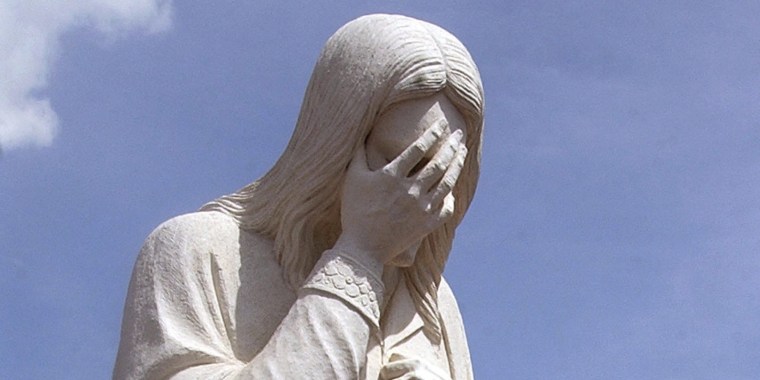
Is God not mad… just disappointed?

How do you think God reacts when we do wrong?

I asked this question to a group of 7-12 grade students from our student ministry last night. As always, I told them that there were no wrong answers. If the question asks what you think, and you say what you think, then you get the answer right. While they couldn’t possibly answer the question incorrectly – unless they were lying – I was hoping against hope that they wouldn’t answer, “I think God gets mad at us.”

And they didn’t say, “God gets mad at us when we mess up.” Hooray! Youth ministry win.

They gave the answer that I think a lot of people (including sometimes me) would, “I don’t think God gets mad at us when we mess up… It’s probably more like when we do something wrong and we get caught by our parents. Then they say something like, ‘We’re not mad. We’re just disappointed that you did this.‘ Like I don’t think God gets mad when we mess up, just disappointed.”


We’ve come a long way since the Sinners in the Hands of an Angry God theology. Most of us are passing on a view of God that isn’t this powerfully vengeful being watching over us who punishes us when we mess up. We’ve come a long way from our hell-fire and brimstone God who will throw someone into eternal damnation for swearing too much or having sex. We have replaced this angry, vengeful view of God with a view of God that is far more tame and human. In this view, God doesn’t want to punish us, God’s feelings just get hurt a lot. With this outlook, God is a friend who we didn’t sit with at lunch or a good parent that caught us in a lie.

At my private Christian middle school (circa  2007) we often unironically sang a song in chapel time called, Can He Still Feel the Nails. It goes like this:

Can He still feel the nails every time I fail?

Can He hear the crowd cry “crucify” again?

Am I causing Him pain, when I know I’ve got to change?

Because I just can’t bear the thought of hurting Him.

Yeah I know. A song that I think many would fairly deem manipulative.

While myself and many in my thought sphere have – in adulthood – laughed at the vast fallacy of that song and other sayings like it, I think we’re still walking around with much of the residue from those views. We’ve abandoned a view of God who hurts us because of our imperfection, and we have adopted a view of God who is hurt by our imperfection. So while we’ve been so right to run from this vengeful view of God, we may have sat down someplace that we need not stay.


This may get fairly philosophical for a bit. Roll with it.

I also just want to say, at a certain point, theology and theological arguments are in some sense broken and unhelpful because we cannot – though we may try – divorce ourselves from our different perspectives. So many people have different ideas and views on the Divine, and perhaps God is big enough to hold all of them. That said, I’ll try and make an argument that may be helpful.

So is God disappointed in us when we fail? Or when we don’t do our best?

A key underlying assumption to even asking this question is God cares about my own personal thoughts and actions. If God does not, then how could we disappoint God? We of course, cannot disappoint someone who does not care. So for the sake of argument, let’s say that God is concerned with me as an individual (my thoughts, actions, being).

Our view of God as a father or parental figure seems to really play into this view of a disappointed God. If growing up, my mom always told me, “Don’t smoke,” and she never saw or became suspicious of me smoking, she would likely expect that I don’t smoke. At that point, if she expects that I haven’t ever smoked, and she catches me smoking, she would be disappointed. Her expectations for me as her son were not met.

Our view of God as a friend can lead to this disappointed view of God too. If every week my friends and I play trivia on Tuesday night, it becomes an expectation of the friends in the group that I will go play trivia with them every Tuesday. At that point, if I bail on trivia, they could be disappointed with me. If I’ve never gone to trivia with them before, and hanging out with them every week is not an expectation, then how could they be disappointed?

Disappointment is a result of unmet expectations.

If we believe God is an omniscient, omnipotent being who is continually creating the universe, it seems unlikely to me that God would be anything less than fully aware of our past, current, and future pitfalls. Does God expect that we will be perfect or close to perfect? Does God even expect that we will give our best effort?

When I truly think about the bigness of God, quippy phrases like “Jesus expects our best” don’t hold up. It may make for a best selling keychain at LifeWay, but upon further examination, where do we even get that? An easy response would be to point me towards literally any of the commands of Jesus from the Sermon on the Mount. Good. But have you ever told someone to do something and not expected them to do it? Have you ever pointed someone in the right direction knowing it’s in their best interest, and still expected them to go their own way? I have, and I would argue that this is could be how Jesus felt.

Throughout the stories of Jesus that we have in the Bible, I have a hard time finding one that describes Jesus as disappointed. (Disclaimer: I could be wrong, and that’s the fun part about putting stuff on the internet.) However, I find a lot of times when people come to Jesus with expectations and leave disappointed. When the rich young ruler comes to Jesus explaining his goodness, expecting a warm embrace and pat on the back, Jesus asks for what he knows the man won’t give, obedience at the cost of his stuff. The man left disappointed. The religious leaders often came to Jesus with questions expecting to be affirmed as correct or to entangle Jesus, but they always left disappointed or even angry.

I would argue that disappointment is much more a human emotion that we feel towards God than the way God feels towards us. God lavishes love and grace upon us expecting nothing in return. No conditions. We don’t really get that because even in the purest forms of human connection, we expect some form of reciprocation. Even the best, most loving parents feel hurt when their children turn their backs on them. God is simply not this way.


To explain what God’s Kingdom and grace is like, Jesus tells the story of a younger brother who didn’t want to wait till his dad died to get his stuff and get on with it. This son goes to his dad and essentially says, “I want your stuff now, I don’t want to wait.” Storyteller Jesus doesn’t then say, “And the father was disappointed.” The father does what his son asks and gives him his share, and the younger son left. The father gave of his love and treasures with no conditions. While the younger son is off burning the candle at both ends, we don’t hear that the father is up all night weeping. Instead, what we see is a father who is waiting for his son to come home. When the younger son returns home, he expects his dad to be mad, or at least disappointed, but instead what he finds when he gets home is a warm embrace and a party. The only character in the story that is disappointed is the older brother, who didn’t understand the bigness of his dad’s love.

We are loved by God without conditions. Immense, pure love, way bigger and better than we love our girlfriends or our kids. Understanding that God’s immaculate love is unphased by our screw-ups or straight up screw-overs is going to help us let go of a whole lot of shame. Believing that we’ve in some way let down the Creator of the universe is a terribly shame-inducing way to live. And shame wrecks relationship. Our fear of disappointing God has for too long kept us from total communion with God and each other. When we feel convicted that we’re in the wrong, believing that God is disappointed keeps us from running home instead of pushing us to running home faster.

When we’ve taken God’s good things and twisted them for our own devices, God isn’t mad or disappointed, God just wants us home. A warm embrace and a party awaits.

privilege of walking

I wrote the following essay a few months ago (June 5th, 2018). I don’t know why I didn’t share it then. I guess I was a little ashamed that I’m not further along with some issues than I am. I think I was also a little scared. Scared that my life may not live up to the ideas that I proclaim myself to seek out. I’m a person, and I don’t always walk the walk as well as I talk the talk. Maybe you can relate to that.

I think this afternoon, I needed to read this again. A couple weeks ago, a young black man, Botham Shem Jean, was killed in his apartment in Dallas by a police officer. For some reason, I felt this one more than a lot of other similar shootings. It could be that I know people who are close to the situation, and it could be that Botham was about my age, went to a school of the same faith tradition as me, and was heavily involved in his University’s community and his church family, much like I am. Maybe it was the Spirit of God giving me a feeling of conviction.

I have put off saying much publicly about my feelings regarding the painful situation in Dallas. I didn’t want anyone to feel as though I was trying to jump in on something that wasn’t mine to jump in on, and I hope that this isn’t perceived that way.

I hope that I am not the only one that this injustice has awakened.


Tonight I went for a walk through my neighborhood.

I started going on walks through my neighborhood last summer due to some stress and a consistent need to clear my head.  I have found that these walks have given me space to talk to God, or to be more clear, talk to myself about myself in front of God.  Yeah, I talk to myself often.  Those who have ever lived with me or walked in front of me can probably attest to that.  I don’t think I have a clinical disorder, maybe it’s just more that I really like to hear myself speak.  Either way as I walk the neighborhood, a lot of my thoughts just come out.  They come out free and unedited.  Sometimes as I walk, I learn that I think and feel things that I didn’t previously know that I thought and felt.

It’s a beautiful evening out in Nashville tonight.  The weather is perfect, and a lot of people have chosen to spend it on their front porch, playing with their dog, or going for a walk themselves.  As I passed other people, we exchanged a smile and a wave, sometimes a hello.  People have always seemed to be pretty receptive to me right off the bat.  Maybe it’s my face or my approachable, non-threatening body shape, who knows.  As my thoughts wandered out of my head tonight, I kept coming back to one thing in particular:  how might this walk be different if I weren’t white?

I remember a time before I was white.  In elementary school, most of my friends at school weren’t white, and they never told me that I was.  We ate lunch together, played together at recess, and participated in a school percussion group together.  On Valentine’s Day I gave everyone a Spiderman valentine.  I got a bunch of different valentines too.  I was good at a lot of things, mostly school stuff.  I won a bunch of awards for the school’s core virtues: responsibility, respect, trustworthiness, citizenship.  I was really good at math and spelling.  I don’t know that my self esteem has ever been higher than it was in elementary school.

I’m not really sure at what age or point in my life it clicked that I was white and some people weren’t.  Somewhere in middle school probably.  I think I’ve subconsciously blocked out most of middle school.  I had to go to a new school in 5th grade.  A private, Christian one at that.  People at my new school had more money than people at my old school.  I guess no one ever really feels like they fit in when they’re in middle school, but I definitely felt like a fish out of water.  The idea of race started to creep in.  As I got older, I noticed that the few black kids at school were all friends with each other.  I heard a joke here, told it there.  It doesn’t take long before that becomes the new normal.

In high school, I still didn’t realize that I was white.  Intellectually I did, but I didn’t have any grasp whatsoever on the weight of what it means to be white.  Being white was normal.  If I was telling a story about one of my white friends, they were never “my white friend,” they were just my friend.  If I was telling a story about one of my few non-white friends, they were “my black friend” or “my hispanic friend.”  I spent hours upon hours in parking lots in high school just talking with my other white friends.  I don’t remember ever getting a sideways glance.  One time in particular, after church, my white youth group friends and I went to Wendy’s.  I maybe ordered a frosty, if that.  We stayed at a table at Wendy’s until they closed for the night.  Then we went out in the parking lot and talked for another couple hours.  Those times are some of my fondest memories from high school, just sitting in public places until late at night, talking and joking with my youth group friends.  Never one time did I even have a thought of “could we do this if we weren’t white?”

I think the Trayvon Martin tragedy was the first time I ever thought that perhaps someone might be viewed differently than me because they aren’t white.  I remember seeing LeBron and the rest of the Miami Heat wearing hoodies.  I knew it was related to the Trayvon Martin story, but I didn’t really feel it.  I remember being a 20-year-old Junior in college at my predominantly white, private Christian university here in Nashville and seeing the events in Ferguson on the news after the Michael Brown shooting.  I remember being in my dorm room with my friend Cedric as we watched on CNN.  In that moment, I knew deep down in my gut that something wasn’t right.  I remember within a week or two of that memory, I went with a group of friends to Nashville’s Live On The Green when, during the show, protesters made their way to the front with signs chanting “NO JUSTICE, NO PEACE.”  At that time I thought, “Why are they protesting here and now and in this way?  Couldn’t more be accomplished by sitting down and having a civilized conversation?

Over the next couple years, the back end of college, I grew a lot.  As more of these cases of policing came to light, I learned about implicit racial bias.  In short, implicit bias is you feeling different about seeing someone that looks like me (white, 24-year-old man) walking through your neighborhood wearing a hoodie at night than you would feel about seeing a black 24-year-old man wearing a hoodie walking through your neighborhood at night.  Or to give another example: someone might feel different about 5 black young men hanging out in a parking lot than they would 5 white young men.  I learned that everyone in the world, based on their life experience, has some sort of implicit bias.  Perhaps most importantly, I learned that I have implicit bias.  I don’t say that everyone has implicit bias to communicate that there’s nothing that we can do about it, I communicate that as a way of saying that I believe coming to grips with our implicit biases is a key beginning step in our growth.

I also learned towards the end of school that once the person or people in power are dictating how someone else chooses to express themselves in protest, it is no longer a protest.  Protests are designed to disrupt in order to get someone’s attention.  The reason people feel the need to protest is not to ruin my concert or an NFL game, often a reason that people protest is because they were not invited to the conversation and feel unheard.  So when we are upset by someone’s protest, perhaps we should invite them to the table, not write them off.

By the end of college, I felt much more of the weight of what it means to be white.  So much so that I had begun to dissociate with my whiteness.  I began to feel a sense of shame about what it means to be white in America.  I felt overwhelmed with the history of how white people in our country have oppressed black and brown bodies.  First with colonization and slavery, then with Jim Crow, and now with mass incarceration.  When confronted with the dark realities of U.S. history, it’s hard to not want to run and hide.  Being naïve is one thing, but once we have faced the reality of systemic oppression throughout our history, what we absolutely cannot do is shrug it off.

Only in the last year have I begun to realize that being ashamed of being white is not a helpful posture either.  To be white and socially conscious, I believe we have to understand our privilege.  The more I think about my life, my history, and my current day-to-day dealings, the more I see myself benefitting from white privilege.  To my white friends, me claiming that white privilege exists in our culture today is not me saying that white people do not work for what they have.  I would go more in depth on the realities of implicit bias, systemic oppression, and white privilege, but that would take many more words.  Furthermore, many more learned men and women writers, authors, and speakers have tackled these issues in great depth, and I would much rather leave you to read their work.

So now I find myself in a position where I ask myself the question: As a white man, how do I use the platforms that I’m given?

The conclusion that I am coming to is this: When possible, use my seat at the table to bring diversity to the table, even if this means giving up my seat.

Granted, I’m 24.  I’m young, and I have a lot of growing up to do still.  Perhaps in a few years I’ll look back at this time and think, “Wow I was young and dumb.”  The great thing about writing for me is that later I get to look back and see where I’ve come from.  I don’t know if anyone will ever read this, but I hope that if you do, you will grant me some grace because I know I probably said some things wrong.  More than that, I hope reading this may propel you to growth.  We all have room to grow, a next step to take, a new conversation to start.  Me included. Scratch that, especially me.

Spider-Man, Creation, and Blemishes

Have you ever made something that you were really proud of? A masterpiece of sorts?

When I was in third grade, I created a masterpiece.

In Art class, we had a new teacher named Mr. Stevens.  He was a really cool younger teacher.  Ok maybe I don’t know how cool he actually was, but to a boy in 3rd grade, a male teacher who isn’t old and boring is super cool.  Mr. Stevens was a really talented doodler, and he loved Marvel comics.  He would always show us some of his drawings of The Hulk, Wolverine, and others.  Spider-Man was his favorite superhero.  Spider-Man is undoubtedly cool; he’s a high schooler that can shoot super strong spider webs from his wrists, climb buildings without any gear, and fly through New York City swinging from web to web and building to building.  I probably would have thought Spider-Man was cool anyway, but the fact that Mr. Stevens liked him really put me over the top.  Mr. Stevens had a ton of drawings of Spider-Man in his classroom that he would show us, most of them were of Spider-Man swinging through New York City.

So one day, after watching Mr. Stevens draw Spider-Man a few times, I decided that I wanted to give it a try.  I started with Spider-Man’s eyes and head followed by the rest of his body, very carefully making sure everything was drawn to scale.  I finished with the web and the tall Manhattan buildings in the background.  It was a masterpiece.

Mr. Stevens had inspired me to create something that took detail and time, and it was the best picture that I had ever drawn (and to this day still might be).  But it wasn’t perfect. I still remember the blue mark that I accidentally scratched onto the paper.  The drawing got partially crumpled in my classically unorganized backpack.  And there were some other spots where I had gotten a tad careless and colored slightly outside of the lines that I had created.

When I look back on that time now, I realize that this seemingly insignificant art class experience was actually teaching me something past how to draw a bomb superhero picture.  I learned that creating something is exciting, worthwhile, and takes time.  I also learned that everything we create will have its blemishes.

In Genesis, our Creator God creates humankind in the Image of God.  Our creative God created creative people.  God then blesses them and commands them to create:

“Be fruitful and multiply. Fill the earth and govern it. Reign over the fish in the sea, the birds in the sky, and all the animals that scurry along the ground.”  Then God said, “Look! I have given you every seed-bearing plant throughout the earth and all the fruit trees for your food. And I have given every green plant as food for all the wild animals, the birds in the sky, and the small animals that scurry along the ground—everything that has life.”

In the Bible, the first thing God tells people is essentially this: “I have created all of this for you. Be creative, fill it, take care of it. Go enjoy creation.

So we know how the story goes, in their creating, they make some mistakes.  They had to leave the Garden, and we call that whole tiny part of the Bible the “Creation Story.”  But God was far from finished creating, that was just the beginning.  Since then, God has continued in the task of creating and so have God’s creative people.

Since the Garden, people have created all kinds of things and very rarely gotten it right the first (or second) time!  Someone at some point figured out how to create fire and then someone found what to use it for.  People created wheels, irrigation, chariots, and now motorized vehicles, running water, and iPhones.  Each person on earth has been given both the ability and the need to create in one way or another.

I have several friends who create their own music.  That is a truly amazing thing to me.  Not only do they have to be able to play an instrument or instruments, but they have to be able to put the different sounds in an order that sounds good and also an order that hasn’t been done before.  A couple months ago I asked one of my musician friends if he thought that someday there would be no music created because everything had already been done before.  He said that he believes new music will always be created because there will always be more fusion and influence and creative people.

I like to write occasionally.  I don’t always have much to write about, but there are rare times like tonight when I can’t sleep because I have to get a thought out.  Writing is a challenge in creativity.  Much like music, I have wondered if someday there will be no new literature because there will be no more creative original thought, but the nature of God’s creation is to be creative.

When I create, there are blemishes.  No matter how well I did in English class in high school or Freshman Composition in college, when creation is involved, mistakes will be made.  Looking back at some essays and posts that I’ve written in the past, I see typos and misspellings (I literally just misspelled “misspellings” three times in a row).  I see ideas that I would word differently now than I did then, and I see posts that I simply wouldn’t write at all now.

I suppose that’s how life is too.  We move through life, and if we do it right, we create amazing and beautiful things.  We create relationships, we create systems, and we create things we’re passionate about.  But the creative process is a messy one.  As we go on living and creating in life, we’re going to make mistakes.  We are going to say something we shouldn’t have said to someone we care about.  We are going to go a little overboard and show a lack of self-control.  And we are going to end things too soon or hang on to things for too long.  These are the blemishes of life.

Often we feel the need to cover up our blemishes, but blemishes are signs of creation and life.  Others need to see our blemishes so they know that yes, we are a masterpiece, but we also are still learning and growing.  We are still being created by the Creator God who sees and knows every time we’ve accidentally scratched the canvass, crumpled things up, and colored outside the lines.  Though God sees our blemishes, God also sees and loves the larger masterpiece that we are creating.

We have been created by the Creator God to be creative people.  Don’t be afraid of messing up.  God is in the business of creating light in darkness, wholeness in brokenness, and masterpieces out of our blemishes.

COMMUNITY. WE NEED IT.

So this summer, I’ve learned a lot. A lot about youth ministry, about life on the inside of a church, and a whole lot about myself. I’ve learned some of my strengths, that some things that I thought were strengths of mine are not quite to strength level, and I’ve discovered a lot about how I interact with people. I’ve also learned a lot about doing things on my own. Being away from home for a few months will do that. The more I have been on my own, the more I have realized that is not what God intended. God made us to be relational beings. From the beginning of time on this Earth, that has been evident.

 Genesis 2:18: “It is not good for man to be alone. I will make a helper who is just right for him.”

In Genesis 2, God was talking about a woman, but I think this rule applies in every case. Not just that every man needs a woman, or wife (in fact, I really feel like the church does a terrible job with singleness, but that sounds like a different thought for a different time), but that every person needs another person. AT LEAST ONE. Some people need more than that.

Luckily, I have found people here in the area with whom I have gotten to share in community with. Everyone, wherever they are, needs people who care about them, and people that they care about. I have been fortunate to find that here in California, and I am even more fortunate to have the awesome support system that I have back in Nashville. That is what I look forward to most about returning to my homeland in a week. If you ask, I would tell you that I’m excited for the fall semester to start. That doesn’t mean that I’m excited for the 8 am classes, the tests, the papers, and the absurd amount of books I’m supposed to read (which reminds me, I still need to purchase those). What I’m excited for is the opportunity to build on the relationships that have already begun and to form the relationships still to be created.

Acts chapter 4 lays the blueprint for the life of a church.

32 All the believers were united in heart and mind. And they felt that what they owned was not their own, so they shared everything they had. 33 The apostles testified powerfully to the resurrection of the Lord Jesus, and God’s great blessing was upon them all. 34 There were no needy people among them, because those who owned land or houses would sell them 35 and bring the money to the apostles to give to those in need.

36 For instance, there was Joseph, the one the apostles nicknamed Barnabas (which means “Son of Encouragement”). He was from the tribe of Levi and came from the island of Cyprus. 37 He sold a field he owned and brought the money to the apostles.”

What we have is not our own. Living in community with others helps us realize that. It’s one thing to hold on to your possessions when you don’t have any friends who go without. We (speaking to myself here) need to be in conversation and in life with those who are in need. It’s easy to help our friends, not as easy to help those we don’t know.

Over the weekend, I got to hang out with an awesome group of guys. On Friday we hit up Santa Cruz and San Francisco on Saturday. These guys are like me – they’re not perfect. It was great being around 4 other guys for those two days. Yes, we were seeing awesome sights and experiencing amazing places, but I would’ve still had a great time if we had just sat in the living room and hung out for two days. The constant good-natured teasing and joking, the conversations only a group of college age guys have, and the comradery among us was just what I needed.

In conclusion, we need community. We need other people to care about. We need other people to care about us. But above all, we desperately need Jesus, or none of this matters.

ALSO.

I have a great friend, Drue, who authored a beautiful piece on his blog regarding this same topic. You should check it out if you’ve got the time. “I was created to… COMMUNE

Also, I have grown quite fond of the band Rend Collective.  On their 2013 album, Campfire, they filmed a video on the making of their album and the community brought on by a campfire. It’s about six minutes long, so you should watch it if you haven’t. “The Campfire Story