Tag Archives: God

Advent – Hope – Luke 21:25-28

Today, we are starting our Advent series, which we will be in for the next four Sundays leading up to Christmas. I’ll just take a moment here to say that if you have never really involved yourself in an Advent practice before, I would like to invite you into that this year. It’s easy to find a plan and do some short daily readings, the Bible App has a 25-day reading plan you can easily start today. __________________________________________________________

Luke 21:25-28

25 “There will be signs in the sun, moon and stars. On the earth, nations will be in anguish and perplexity at the roaring and tossing of the sea. 26 People will faint from terror, apprehensive of what is coming on the world, for the heavenly bodies will be shaken. 27 At that time they will see the Son of Man coming in a cloud with power and great glory. 28 When these things begin to take place, stand up and lift up your heads, because your redemption is drawing near.”

This is the text for week 1 of Advent this year. I don’t know about you, but this doesn’t sound like Christmas to me. What happened to the baby in the manger, no room in the inn, the star that showed the shepherds where to go? What happened to that Scripture that Linus reads in Charlie Brown Christmas? If you’re like me, this text seems out of place in this Christmas season.

I didn’t grow up in a church that practiced Advent, we weren’t like some Christians who didn’t acknowledge Christmas, but we didn’t do Advent. And I think that in this body here at New Garden, many of us are unfamiliar with Advent. We know it’s the time leading up to Christmas, but maybe not much else, so this morning I thought it might be helpful to briefly give some background on what Advent is and how it can help form our faith during this season.

Advent is the 4-week long anticipation and celebration of Christ’s birth and Christ’s return. Advent means arrival, so during this season we prepare ourselves for the arrival of Jesus, both God coming in the form of Jesus which we celebrate at Christmas, and we look forward to the arrival of Jesus again.

So a simple way that we can think of it is the same way that the Jews would’ve been hoping for and anticipating a Messiah before Jesus, we now hope for and anticipate Jesus’ return. So we do this Advent practice by reading Scripture, spending time in prayer, and reflecting on our need for a Savior.

Each week during Advent has a theme and different people do the themes in different orders, but just so we’re on the same page, we’re doing them in this order: hope, peace, joy, love, and then on the 29th with our friends at the Woodmont Hills Campus, we’ll celebrate the arrival or Advent of Christ. Today’s theme, as we’ve already mentioned is Hope.

Hope may seem like this abstract concept, but hope actually drives much of our behavior as humans. We take action in different ways because we are hoping for certain outcomes. We hope that brushing our teeth and flossing will keep our teeth and gums healthy. We hope that being a reliable and trustworthy worker will help us have job security and gain influence. We hope that the kindness we show to our neighbors will be reciprocated or at least appreciated.

And the fact that hope often drives us to good deeds, is concerning because sometimes the world that we live in can feel hopeless. In this room alone, we could probably share stories for days on end about moments in our life where we experienced serious disappointment. Times when we had put years of effort into a relationship only for it to fall apart. When we spent late nights studying but didn’t get the grade we wanted on the test. When we got laid off.

And to top it all off I’m sure all of us in this room if we’re being honest could identify a time in our life when we were disappointed because the thing that we prayed to God for and hoped for didn’t come through. The test results showed no improvement, that relationship is still strained at best, our desires haven’t been satisfied. And as Christians, as followers of Jesus, we have to live in that tension. We know we should hope in God, but we also know that we live in this unredeemed space.

And so, a lot of times we turn our hopes elsewhere. We put our hopes in other things to meet our needs, and our hopes are revealed in our actions. Country singer Luke Combs has a lyric: longneck, ice cold beer never broke my heart. And its not just vices that we turn to. We put our hope in systems, in ideas, in security. There’s a lot of people in our country who are really disappointed right now because of the election result. That thing that they were hoping for isn’t going to happen. And the other side, they got to experience that a few years ago.

As an escape from a world that seems hopeless, we put our hope in truly meaningless things like football. I hope you weren’t hoping in the Titans this year. If you were hoping in the Vols, you may be feeling ok right now but just wait… Hope is an unavoidable part of the human condition, so we all are hoping for something, putting our hope in something. What is that thing to us? To you? To me?

While we will experience inevitable disappointment here on earth, we can still have hope. Hope that God is going to redeem us. Hope that Jesus will arrive soon and set all things right.

There’s a preacher and author I’ve been taking in a lot recently named John Mark Comer. He describes hope in Scripture like this:
“The expectation of coming good based on the person and promises of God”

Notice that our hope, our expectation of coming good, is not based on us or our experiences. We have hope because of God and God alone. We cannot get ourselves to this coming good by trying harder. We cannot get ourselves to the goodness of God by voting for the right person. We cannot think or debate ourselves into a perfect society. This complete redemption only happens at the moment of Jesus return, and we can’t know when that’s going to be.

When I was growing up, I was not looking forward to Jesus coming back to earth. I had heard pieces of Scripture like the one I read earlier: nations will be in anguish and perplexity at the roaring and tossing of the sea. 26 People will faint from terror, apprehensive of what is coming on the world, for the heavenly bodies will be shaken. And that didn’t sound all that appealing to me. I’d lay in bed at night and if there was sirens going off or car horns, I’d go over to the window and look to the sky afraid that it might be time.

Dr. Earl Lavender who is one of the shepherds at the Woodmont Campus and teaches in the Bible department at Lipscomb said that in his formative years he would fend off Jesus’ return by mentioning in his prayers each night that he knew tonight was the night. The Bible says no one knows the day or the time so by letting God know he was expecting it, God had no choice but to wait til later.

And I think one thing that the Enemy enjoys about our society right now is our comfort. Why do we need to go to heaven? We’ve got iPhones and football and Thanksgiving leftovers in the fridge. We’re so insulated from pain and suffering unless its inside of our house that we rarely cry out, “Come quickly, Lord Jesus.” Over the last two thousand years, Christians have moved from daily hoping for Jesus’ return to accepting that it won’t be happening in our lifetime. But whether Jesus comes back today or in a thousand years, we should be hoping it’s today. Because it’s going to be awesome.

25 “There will be signs in the sun, moon and stars. On the earth, nations will be in anguish and perplexity at the roaring and tossing of the sea. 26 People will faint from terror, apprehensive of what is coming on the world, for the heavenly bodies will be shaken. 27 At that time they will see the Son of Man coming in a cloud with power and great glory. 28 When these things begin to take place, stand up and lift up your heads, because your redemption is drawing near.”

Don’t be afraid! Stand up, lift your heads, your redemption is drawing near. The moment we’ve been waiting for has arrived. We get to meet Jesus! This is good news.

Lord Jesus, Come Quickly.

Each week, we gather at the Table together remembering Jesus until His return by eating this bread and juice that symbolizes Jesus’ body and blood. This is just a placeholder. Someday we will get to share a meal with Jesus face-to-face. That’s exciting.

December 1st, 2024

Watch here: https://youtu.be/yirz_sGpXt0?si=Z_9-ORu6w2dzIKK7&t=1681
Advent – Joy – Luke 3:7-18

John said to the crowds coming out to be baptized by him, “You brood of vipers! Who warned you to flee from the coming wrath? Produce fruit in keeping with repentance. And do not begin to say to yourselves, ‘We have Abraham as our father.’ For I tell you that out of these stones God can raise up children for Abraham. The ax is already at the root of the trees, and every tree that does not produce good fruit will be cut down and thrown into the fire.”
10 “What should we do then?” the crowd asked.
11 John answered, “Anyone who has two shirts should share with the one who has none, and anyone who has food should do the same.”
12 Even tax collectors came to be baptized. “Teacher,” they asked, “what should we do?”
13 “Don’t collect any more than you are required to,” he told them.
14 Then some soldiers asked him, “And what should we do?”
He replied, “Don’t extort money and don’t accuse people falsely—be content with your pay.”

15 The people were waiting expectantly and were all wondering in their hearts if John might possibly be the Messiah. 16 John answered them all, “I baptize you with water. But one who is more powerful than I will come, the straps of whose sandals I am not worthy to untie. He will baptize you with the Holy Spirit and fire. 17 His winnowing fork is in his hand to clear his threshing floor and to gather the wheat into his barn, but he will burn up the chaff with unquenchable fire.” 18 And with many other words John exhorted the people and proclaimed the good news to them.

Luke 3:7-18

This is the text for week 3 of Advent. And its another text that may not seem like Christmas. But let’s remember, during Advent, we wait expectantly for the advent – or arrival – of Jesus. And these people here that John is baptizing they are also waiting expectantly. Waiting expectantly for the Messiah to come and be revealed. In fact, they think it might be John.

John was Jesus’ cousin, and he was born about six months before Jesus. John was also born in a miraculous way because his mother Elizabeth was old and unable to bear children. An angel appeared to John’s father Zechariah who was a priest, so it wasn’t a totally dissimilar experience from Jesus’ birth story.

But John knew what he was supposed to do. He knew he wasn’t the Messiah, he was just the one announcing the Messiah would come soon. There’s a lesson in there I think. We’ve got to know our role. We’re nobody’s savior, we’re just pointing people to Jesus.

And so during this Advent season, we can interpret John’s message as how to wait expectantly for Jesus.

“Anyone who has two shirts should share with the one who has none, and anyone who has food should do the same.”
“Don’t collect any more than you are required to,” 
“Don’t extort money and don’t accuse people falsely—be content with your pay.”

I hear this message from John pretty clearly: don’t have more than you need, don’t take more than you need. There’s enough for everybody. Be content and generous.

On the one hand, we’ve got these instructions from John about how to behave, and on the other hand, we’ve got our Advent theme for this morning: Joy. We know that the news of Jesus’ birth was good news that it would bring great joy to the world, and this time of year is one that brings a lot of joy. Fond memories of Christmases past. Excitement to watch that person open the gift that we got them. A couple days off work for most of us. Time spent with family we don’t see that often.

And we know those joys that we get to experience around Christmas. And yet, for a lot of folks, this Christmas will be a difficult time. We notice who isn’t going to be there on Christmas morning this year. We realize that Christmas is going to feel different this year than some of those fond memories of Christmas past. 

So how do we experience joy this holiday season? Does someone in our life get us a new Lexus with the big bow on top? Do we finally get the Red Rider BB Gun? I think John the Baptist would say, “take care of others.” “You’ve got too much stuff, give it to somebody else.” “You don’t need extra.”

This idea of simplifying your life and getting rid of your stuff isn’t only a Christian idea. Shows like Love it or List it and influencers like Marie Kondo have grown to prominence over the idea that having more stuff won’t make you happy. And it’s true that it won’t. But the joy that we’re talking about today is deeper than that. The joy that we’re talking about is only possible through a relationship with Jesus. A joy that transcends circumstances.

The apostle Paul is an example of this joy. In Colossians 1, he writes “Now I rejoice in what I am suffering for you.” He’s writing letters to churches from prison and yet he still has joy because he is connected to something far bigger than a self-help, simplify your life fad. When he met Jesus, everything changed. As a religious leader in the wake of Jesus death and resurrection, he was looking to imprison and kill followers of Jesus. But when he met Jesus on the road, his life was changed. He took on a new name. He was given a greater purpose. This joy that Paul was referring to was a deep, abiding joy.

So how do we get from where we are now to where Paul is. Where he can be in prison and still rejoicing. If you’re like me then being a joyful person is easier said than done. I experience a lot of joy when I’m here with you at 10am on Sundays, but what about when I’m running late on Monday? When I’m sick on Wednesday? When my boss makes a comment I don’t like on Friday?

It’s not going to be easy and it’s not going to be quick. Think of it like training to be a joyful person. If you decided today that you were going to run a marathon, you wouldn’t sign up for one on Saturday. You’d pick a date way out in the future because you know that it takes months to train. For me, I’d probably pick a date a few years off in hopes that everyone would forget I ever said that I was going to do that. But the first time you go running, you’re not ready for a marathon. And after a month of training 5 or 6 days a week, odds are you still won’t be ready to run a marathon, but your endurance is going to be way better than it was a month prior. It takes time, months, probably more like years, but you can become a joyful person.

So how? How are we going to do that? I’ve got a few suggestions. And I by no means am a finished product on this, but looking back, I can see how these things are forming me.

Ask God for Joy
This may seem obvious, but I think it’s important to mention. Like I said earlier, there’s a lot of stuff you can find out there in pop culture about how to be joyful, but that messaging is devoid of the provider of joy. God created joy for us to experience, and the deepest, most all-encompassing joy is found in God alone. So ask for it. God wants to give you joy.

Express Gratitude
This has been really helpful for me. In a world that wants to constantly remind us of all the stuff we don’t have, remind yourself of the good things in your life. When I’m pulling out of our neighborhood most mornings, I offer a simple prayer: thank you God for the work I get to do. There’s something in your life to be thankful for, express gratitude for it! Doesn’t have to be only through spoken prayer, for the journalers out there.

Practice Contentment
This is what John was talking about in our Scripture this morning. What you have is enough. Look for ways to provide for other people from your excess.

Remember Jesus Wins
We talked about this a couple weeks ago when we talked about hope. We know how the story ends. Jesus wins. Whatever our current circumstances may be, we have hope for a better future. We should be hopeful for Jesus’ return. Remembering this over and over and letting it sink deep down into our bones is going to bring us joy. And each week, we go to the Table together to remember Jesus. This should be a joyful time. I didn’t grow up in a church where talking during communion was acceptable. You passed the trays in silence. You could hear a pin drop. And growing up, I didn’t get the message that this was a time for rejoicing. I’m still learning more about what this time together at the Table means and how it can transform our lives. Jesus wins, and we can rejoice in that together this morning.


December 15th, 2024

Watch here: https://youtu.be/3rT5eldDJiw?si=RE7qvh42QKfBdEsN&t=859

Wait – Acts 1:1-8

As we begin the year, we’re going to be walking through Acts 1-15 together. We’re going to see God take this group of folks that was cowering in a dark room after Jesus Crucifixion and grow them into this big, bold, multi-national, multi-cultural group of Jesus like people. I know that maybe the more official title of this book is the Acts of the Apostles, but I think a more descriptive title of the book would be the Acts of the Holy Spirit.

___________________________________________________________________________

In my former book, Theophilus, I wrote about all that Jesus began to do and to teach until the day he was taken up to heaven, after giving instructions through the Holy Spirit to the apostles he had chosen. After his suffering, he presented himself to them and gave many convincing proofs that he was alive. He appeared to them over a period of forty days and spoke about the kingdom of God. On one occasion, while he was eating with them, he gave them this command: “Do not leave Jerusalem, but wait for the gift my Father promised, which you have heard me speak about. For John baptized with water, but in a few days you will be baptized with the Holy Spirit.”
Then they gathered around him and asked him, “Lord, are you at this time going to restore the kingdom to Israel?”
He said to them: “It is not for you to know the times or dates the Father has set by his own authority. But you will receive power when the Holy Spirit comes on you; and you will be my witnesses in Jerusalem, and in all Judea and Samaria, and to the ends of the earth.”

Acts 1:1-8

It’s the first week in January… This is the time of year where we all put our heads together to come up with a plan for how we’ll improve ourselves, how we’ll boost profits, how we’ll fix our businesses, our relationships, our churches. Because there’s a lot of work to do. There’s a lot of things to get done. There’s a lot of projects to get the ball rolling on, all that stuff when we said “we’ll circle back on this in the New Year” well now it’s time to start doing that thing we said we were going to do.

I personally have never been much for resolutions. I normally start well on January 2nd because I never know what I’m resolving to do until January 2nd, its not something I put thought to before then. And then I do really well for about 3 days. Then the 4th day I miss. Something comes up, and that thing that I was planning to do gets pushed aside for something more pressing or at least that’s what I tell myself. But I come back on day 5 ready to rock. Then two weeks later, that thing that I had resolved to do, I’ve totally moved on from.

And that frustrates me because every day all year long I see people sharing their wins. All this stuff that they’ve done and accomplished. Our culture values starting, going, trying, overcoming, succeeding, winning, to put it simply: doing. These values instilled in us from the time we are children: work hard, come up with solutions, if we’re not winning, we’re not trying hard enough.

And so, when something isn’t working. We try harder. We brainstorm. We spend more and more time trying to fix what it broken.

Our churches are not exempt from this. We’re not the only folks who come on Sundays and remember a time in our lives when there was more people in the room with us on Sundays. It’s happening all throughout our country. Each day we become a more secular society. And no political power grab is going to reverse that trend. And its not that our programs aren’t good enough. It’s not that churches aren’t doing enough things. Church growth strategies and church consultants are not the hope of the world. Even still in 2025 America, Jesus is the hope of the world.

We can’t try and do ourselves into going where God wants us to go. And this frustrates me and maybe you too.

In these first few verses of Acts, we see Jesus give a holy command to his disciples. And it’s not to scheme and plot how they’re going to grow church attendance. It’s not to go out and try really hard to win the approval of folks in town. Jesus tells them to wait. Wait expectantly for the Holy Spirit to move and when it comes, go where it’s taking you.

They’ve just been with Jesus for three years, walking with him, talking with him, seeing God work in mighty ways, and yet according to Jesus, they still need to wait. They need guidance from a source outside of themselves. Jesus knows that this new Kingdom He’s come to bring about is only possible with divine intervention and leadership. So he doesn’t take this time to give them a pep talk. He’s not saying you guys got this now that I’m leaving. He’s saying wait for more guidance. The Holy Spirit will lead you where you need to go.

There’s a book I got into last year titled, When Church Stops Working, it talks a lot about this problem that churches are facing as we move into a more secular time. Here’s a passage that connects with what we’re talking about today:

“In Acts 1:4 we read that the first command Jesus gives the disciples is “not to leave Jerusalem.” We might have expected that first command to be to go out, to witness, to start a program, to preach, to teach, to do something, anything, that would make the church bigger. But Jesus orders the disciples to stay in Jerusalem and wait. The real origin story of the church does not start in Acts 2 with progress and growth. The real origin story starts in Acts 1 with waiting for God to act. God is the hero, and the church waits.”

The problems we experience in our secular world do not require secular strategies, they need sacred solutions.

So I don’t think I’m really breaking any news here. Obviously, we need God to intervene in our world and the Holy Spirit to lead us. But how do we cultivate a culture where discernment alongside the Holy Spirit is our default mode? Now its common for us to have periods of discernment like when we are appointing new shepherds or something like that, but how do we become a group of people who naturally are attentive to and aware of the Holy Spirit’s direction in our midst? To borrow some language from Mark Love and his book It Seemed Good to the Holy Spirit and to Us, how do we become a sailboat instead of a rowboat? How do we as individuals become sails instead of oars?

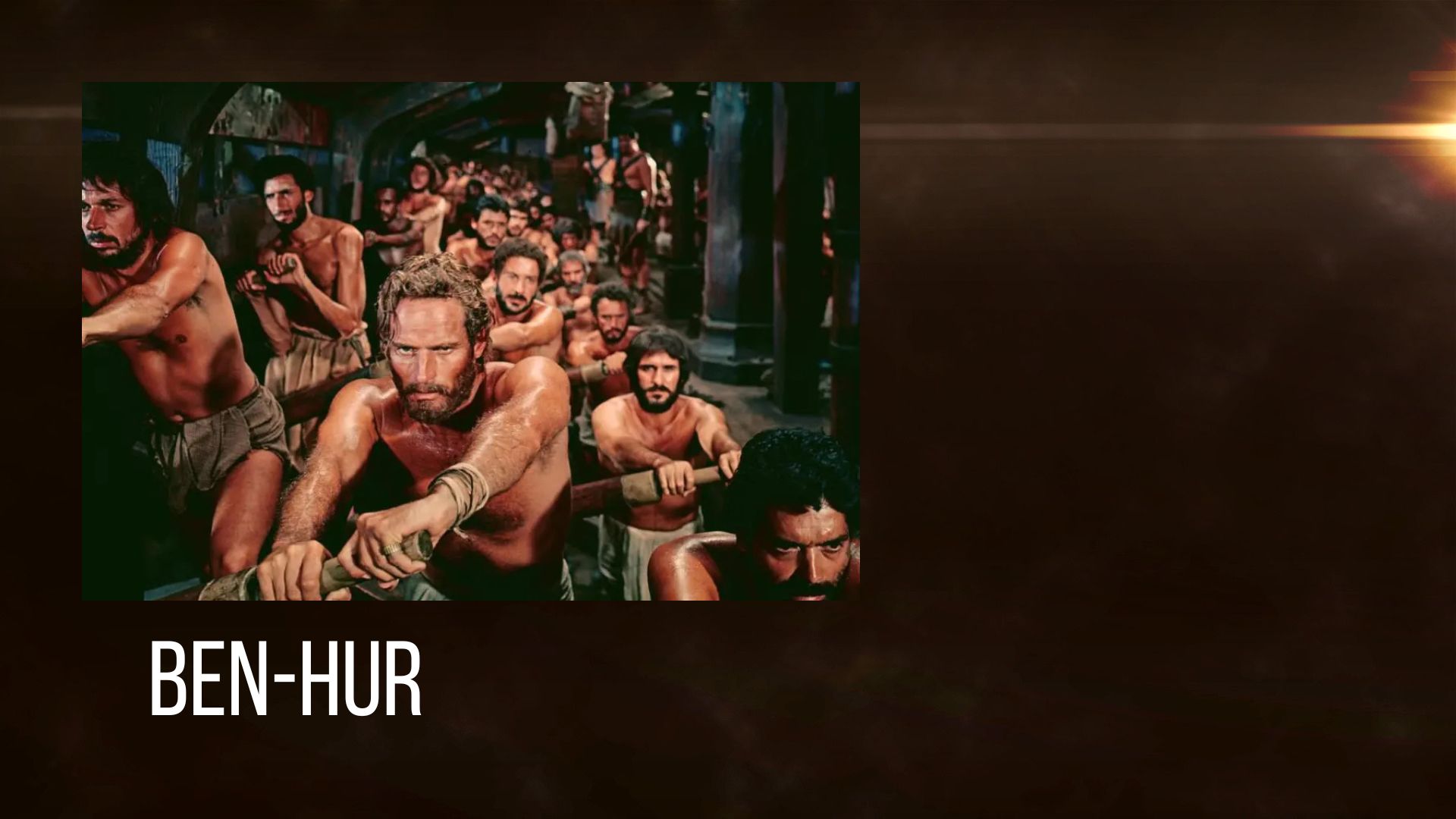
Just for fun a couple images from pop culture come to mind. Here’s an image from the 1959 movie Ben-Hur. He’s depicted here as a prisoner in the bottom of a Roman ship where they were forced to row to keep the ship heading where it needs to go. Unfortunately, I think this is a great illustration for how we often attack problems both as individuals and as groups. Sayings like “if it is to be, it is up to me” tell us that with grit and determination we can exact our will on the world around us and bend it to be what we want it to be. Just keep rowing. I think this mindset leads us to a lot of places we were never meant to go. It leads to power grabs, burnout, and a lot of frustration when we don’t get the outcome we want.

On the other hand, here’s an image from one of Wesley’s favorite movies, Moana. Which one of these pictures looks like they’re having more fun? When we accept our role as a group of people being led by the Holy Spirit, we can walk forward into community with empty hands, willing to accept the moment we’re in and be transformed by God no matter what comes our way.

So how do we as a church community get from being a rowboat to a sailboat? What sort of practices can we begin now so that when there are needed moments of discernment and direction from the Holy Spirit, it’s not such a foreign concept to us?

We’ll talk about this at the end of our series, but in Acts 15, the apostles had to discern what to do in a big way. There were some people that thought one way and some people that thought another, but because they had taken on a lifestyle that was so dependent on the guidance and discernment of the Holy Spirit, they were able to meet the moment, and be in tune with what God’s plan was for the Church.

In his teachings from Practicing the Way, John Mark Comer claims that if we want to become like Jesus, we’ll have more success if we train well than if we try hard. To explain that simply, the idea is that if you just wake up every day and try to be like Jesus, that’s great and good, but if you have not been committing yourself to the spiritual disciplines of prayer, meditating on Scripture, fasting, giving, and living in community with other believers, going out and being like Jesus will be frustrating to you because you will fail. On the other hand, when your heart has been transformed by the Holy Spirit through these spiritual disciplines, being like Jesus will be far easier for you, because you will already have been transformed into someone more like Jesus than you are right now.

So as we enter into a New Year here together today, my invitation to you is not to pick up a flyer on your way out that outlines our 2025 strategic plan for improvement and growth. Instead, I am inviting you to envision a church that walks in step with the Spirit, and help us take a step in that direction by engaging deeper in spiritual practice this year. That may be participating for the first time in a practice of Sabbath. Setting aside time in your week outside of Sunday morning removed from the workings and worries of your day-to-day life where you can spend time intentionally with God and your family or a close circle of friends. It may be praying each day for the first time in your life when you wake up, when you go to work, when you go to sleep. It may look like reading Scripture in community with other believers as part of a Bible Reading Group. It may be fasting from something in your life to make more room in your heart, your calendar, your wallet for the Kingdom of God.

And now we point ourselves towards the Table, the spiritual practice that we do together each week as we wait expectantly for the return of Jesus. All are welcome to come and share communion with us around one of our tables today.


January 5th, 2024

Watch Sermon: https://youtu.be/y8RdOEz9XPs?si=HeHO7gwHWWqYknZS&t=1632

I knew. But I didn’t know

15 years ago today, I was baptized. I was fourteen. It was mid-November and for whatever reason, on that day the water heater for the church baptistery was down. It was cold. I remember wearing the church’s button up onesie and how it was really uncomfortable, especially soaking wet. I remember how loved I felt in that moment by God, my family, and my church family.

I think I got baptized for a few reasons. I thought it was the right thing to do. I wanted to go to heaven when I died. And thirdly, I wanted Jesus to be the Lord of my life. I knew then that following Jesus was something I wanted to do. But I didn’t know how my faith would grow and change and expand over the next fifteen years. I knew. But I didn’t know.

On Sunday, a boy from our church made the same decision and was baptized while surrounded by family and friends. He knows God is good. He knows that he wants to follow Jesus. But I doubt he knows all that life holds for him – how his faith will grow and shift. He knows. But he also doesn’t.

In that cold baptistery, I had no idea all the places that my faith would go over the next fifteen years. Learning more ways to trust God and experience the Holy Spirit in Scripture, silence, and song. Losing many appendages of what my fourteen-year-old faith was as I transitioned to adulthood. From doubting that I could live into who God was calling me to be, to doubting God’s power and goodness in general. From feeling like a faith success story to feeling like a failure. I might have known a little in that baptistery, but I didn’t know much.

Through it all, I believe God has been consistently present and benevolent in my life. Both when I have felt the presence of God most strongly and when I have doubted God’s existence, I have come out on the other side with new perspective. I’ve learned that God doesn’t live up on the mountain, God comes down to live with us wherever we are. On a street corner in San Francisco, on a hill in Scotland, awake in bed late at night, at the end of a broken relationship, and everywhere in between, God finds us.

Baptism isn’t a course you need prerequisite courses to enroll in. It’s a person’s decision to do the following Jesus thing. It’s not an end goal, it’s not a checkpoint. And with that, we must accept that we don’t know what we’re signing up for. None of us do. We don’t know how our life of following Jesus will go. Will it look like we hope? Will it look like our mentors’ lives? We can’t know. But what we can know is that we are attaching our life to something that is so much bigger than ourselves. We are committing to walking that narrow road with Jesus. And sometimes we’ll stop and won’t make any progress for a while, and sometimes we’ll turn and go the other way, but God will be there with us through it all.

So baptism is a wonderful decision to make and thing to do, but that moment in the water is brief. I don’t remember too much about that day, but I remember a feeling of clarity and knowing. And while I have come to realize that we can only know so much, at the end of the day, I know for sure that Jesus is someone that I want to be like – someone I want to follow. I’m sure in fifteen years (Lord willing) I’ll look back at who I am now and think that I knew a little, but I definitely didn’t know everything.

So we can rest easy in what little we know. There’s a God who loves us wholly and totally simply because we exist. We can move in faith trusting that God will be with us no matter what comes or changes.

Let’s go and do it. We may not know much, but we know enough.

Enough Blessing To Go Around

Over the last month or so, I have been listening to the Bible Project’s podcast series called Firstborn: The Last Will Be First. They do really great work if you’re not familiar with them – making layered scholarly studied of the Bible approachable and understandable for us regular folks. In this series, they’ve been talking through the biblical theme of The Firstborn, which, when closely examined, plays itself out differently than I would’ve thought.

Culturally in Old Testament times (and still today in some sense), the firstborn son was to be the one who was blessed with an extra portion of inheritance and was to take on the responsibilities of the family leader after their father died or lost the capacity to fulfill those roles. While this may be the cultural norm, God often operates outside this birth order rule when choosing who to annoint, bless, or carry out His plans.

In the very beginning, God creates those who will rule over creation last, not first.

God favors Abel’s offering over his older brother Cain’s.

God chooses a people through the family line of Shem, the middle of Noah’s sons, not Japheth, the oldest brother, or Ham, the youngest brother.

God blesses the world through Abraham’s second child Isaac, instead of Ishmael, his oldest son.

God turns Jacob (or Israel) into a great nation, not his older brother Esau.

The list goes on and on and on.

While God is doing this, we see struggle from those not initially blessed by God:

Cain kills his brother Abel.

Ham seeks to establish himself as the family alpha.

Sarah struggles with Abraham’s second wife Hagar providing a son first.

Jacob and Esau struggle over Isaac’s blessing for the firstborn.

In all of these stories, there is an underlying human myth that is causing these conflicts: That there is not enough of God’s blessing for everyone. If we don’t get it first, we might get left out. This lack of trust that they will be taken care of causes people to do evil in the world: take life and deceive, jostling for position to receive blessing first.

This myth of scarcity: That there will not be enough for everyone, permeates our culture still today. Even in our Christian communities. We draw lines explicitly and implicitly communicating who is in and who is out. It is completely draining to me how much of what I see online is Christians debating who will receive blessing from God and who will not.

Jesus entered our world proclaiming a new Kingdom, one devoid of cultural lines separating those who are blessed from those who are cursed. Jesus was spreading the news that whoever believes in Him would be blessed. There is enough for all, just believe and come into the light (John 3:14-21). We don’t need to jostle for position, in fact, like Jesus we can put others above ourselves. In this new Kingdom, the first will be last.

Somewhere along the way, we have begun to follow people besides Jesus. We have been convinced that there is not enough, so we have to decide who is outside the blessing of God. Now we spend way too much time arguing, debating, and condemning the world that God sent Jesus to save.

Jesus came proclaiming good news to the poor and the outcast. Let’s do more of that. There is enough.

“For God so loved the world that he gave his one and only Son, that whoever believes in him shall not perish but have eternal life.  For God did not send his Son into the world to condemn the world, but to save the world through him.  Whoever believes in him is not condemned, but whoever does not believe stands condemned already because they have not believed in the name of God’s one and only Son.  This is the verdict: Light has come into the world, but people loved darkness instead of light because their deeds were evil.  Everyone who does evil hates the light, and will not come into the light for fear that their deeds will be exposed.  But whoever lives by the truth comes into the light, so that it may be seen plainly that what they have done has been done in the sight of God.
John 3:16-21

LINK: Here’s a great 5 minute video resource on the theme of The Firstborn in Scripture!

Practical Wisdom – Reading James Together

Last night we had the youth group students over to our house, as we often do. We normally have a meal together and then have a discussion-based devotional. I love being able to have them over, but sometimes the discussion is more difficult than others. Teens these days have a lot on their minds. There’s the stuff that has always been on teens’ minds: school stresses, crushes, self-esteem issues, family angst, but now all those things are amplified by their awareness of everything all at once thanks to smartphones, the internet, and social media.

With all of that swirling around in their heads, its hard to want to dive deep into Scripture – actually, I don’t think its a lack of wanting to, but its a quicker frustration with not immediately reading and understanding well enough to have some thoughts. In our culture of immediacy, sitting and soaking a text up can be hard because we’re not used to doing those things.

Last week, we read Hebrews 11. I’m not sure we got past verse 1:
“Now faith is confidence in what we hope for, and assurance about what we do not see.” This is a great piece of text, but it’s so abstract! It’s so easy to get caught up in the semantics (just the English, not even the Hebrew/Greek) and lose the point. So many words to define. And after that we have to think about what this means for us, examples from our lives etc etc. I know that last week was fine, good, and helpful because we were together in our home reading the Bible, praying together, and talking about our faith, but afterwards Madeline and I were kind of left wondering whether we had all really “gotten it.”

Contrast that with last night. We’ve been reading through James as a church, and this week we talked about James 2:1-13, so last night we read it and talked about it with our students. It starts like this:

My brothers and sisters, believers in our glorious Lord Jesus Christ must not show favoritism. Suppose a man comes into your meeting wearing a gold ring and fine clothes, and a poor man in filthy old clothes also comes in. If you show special attention to the man wearing fine clothes and say, “Here’s a good seat for you,” but say to the poor man, “You stand there” or “Sit on the floor by my feet,” have you not discriminated among yourselves and become judges with evil thoughts?

After we finished this portion, our resident eighth grader blurted out: “That is the easiest to understand part of the Bible that I have ever read!” It was a beautiful moment. She heard something from the Bible and it made sense to her. So of course, we didn’t call it a night and all head home, we talked about it. Sometimes following Jesus isn’t nearly as hard as we make it to out to be with all of our meetings and word studies. Simply put: Love everyone. Don’t treat people better or worse based on what they have or don’t have.

I’ve really enjoyed listening to, reading, and talking about the book of James with our church family over the last few weeks, and we’ve still got a few weeks to go! If you want to read and talk about the Bible with your family – or you want to think about how Christians should live – I recommend James as a great place to start. It’s Christian Living 101.

Blessings!
MC

Book Reflection: The Pursuit of God

If you read my last post, you know that my reading of this book comes on the heels of reading The Ruthless Elimination of Hurry by John Mark Comer. A.W. Tozer’s The Pursuit of God has been a very fitting follow up.

The Pursuit of God is a classic for modern Evangelicals in the West, and it’s easy to see why. Tozer’s point: God is here with us, now, inviting us into a relationship. Because of that, the book asks the questions: why are we not taking advantage of that opportunity to commune closely with God? And how can we get there?

Perhaps my number one take away from the book is this: In order to move into the relationship God is inviting us into, we must acknowledge God in all the moments we live out: the big, the small, the mundane, the heartbreaking, and the joyful. In acknowledging God’s presence, we can give each moment over to God, aligning our lives more and more with God’s will, strengthening our connection with our divine Father.

What does this look like in practice? I tried to talk this out with our church’s youth group on Sunday night. I think the Apostle Paul encapsulates this idea well:

“Rejoice always, pray without ceasing, give thanks in all circumstances; for this is the will of God in Christ Jesus for you.” 1 Thessalonians 5:16-17

Our lives cannot be segregated out into different containers, God is with us in every instance. Whether we’d like to or not, we can’t escape the presence of God, as David describes in Psalm 139:

Where can I go from your Spirit?
    Where can I flee from your presence?
If I go up to the heavens, you are there;
    if I make my bed in the depths, you are there.
If I rise on the wings of the dawn,
    if I settle on the far side of the sea,
 even there your hand will guide me,
    your right hand will hold me fast.

Just because we haven’t been making ourselves aware of God’s presence with us in every moment, doesn’t mean God has not been with us. So how can we pray without ceasing? How can we acknowledge God in our midst in the different things we do throughout the day? What I recommended to our students is a simple prayer as they enter school, work, etc.:

God, please be with me as I __________ today. Make me aware of your presence in each moment, so that I may give thanks for the good in my life and that I may be comforted and strengthened when challenges arise.

Perhaps the bit from Tozer that connected me instantly back to Comer’s book is the multitude of things that we must have surgically removed from our hearts, so that God can fill the space. These areas differ for all of us, but we can be so preoccupied with our things, that God’s presence seems like a foreign concept or a faint memory from long ago.

Perhaps this preoccupation with worldly things is actually what’s burning us out. Jesus offers something better:

“Come to me, all you who are weary and burdened, and I will give you rest.  Take my yoke upon you and learn from me, for I am gentle and humble in heart, and you will find rest for your souls.  For my yoke is easy and my burden is light.”

Trade in your load for the yoke of Jesus. Unburden yourself. Before this invitation, Jesus says this:

“I praise you, Father, Lord of heaven and earth, because you have hidden these things from the wise and learned, and revealed them to little children.  Yes, Father, for this is what you were pleased to do.  All things have been committed to me by my Father. No one knows the Son except the Father, and no one knows the Father except the Son and those to whom the Son chooses to reveal him.

Let us become once again like little kids at the feet of Jesus: unconcerned with titles, square footage, and 401k’s. Let’s go about our lives holding the hand of our Father.


At the end of each chapter in the book, Tozer shares a prayer. I have adapted one that I found to be extremely convicting for my life and our culture. I will share that in conclusion.

The Blessedness of Possessing Nothing:

Father, I want to know You, but my weak heart is scared to give up its stuff. I can’t give it up with out pain, and I am trying to be open about that fear. I’m scared, but I’m here.

Please remove all the things that I have given myself to that have become a part of me, so that You may enter free of resistance. Then You can make Your home beautiful. Then my heart will need no light from outside because You will fill me with all the light and warmth I need. 

In Jesus Name, Amen.


Blessings,
MC

Book Reflection – The Ruthless Elimination of Hurry


“Come to me, all you who are weary and burdened, and I will give you rest.  Take my yoke upon you and learn from me, for I am gentle and humble in heart, and you will find rest for your souls.  For my yoke is easy and my burden is light.” -Jesus in Matthew 11:28-30


Though I have resisted the hype around the book for a couple of years, I read The Ruthless Elimination of Hurry by John Mark Comer this week. I guess I put it off for the same reason that I put off watching Ted Lasso for a couple years – it couldn’t possibly live up to the hype, right?

Turns out, I’m really glad that I finally read the book. Not because it was filled with earth shattering new ideas, but because it served as a really poignant reminder that our apprenticeship under Jesus, as Comer would call it, is not meant to be complicated, it’s meant to be really simple.

Our culture loves to complicate things through addition: another show to watch, another coffee shop to try, another trip to take. And while technology has made accomplishing tasks in our world so much more efficient, we still feel like we don’t have enough time. Through church sermons, teen talks, and devotional books, we encourage each other to make time for our relationship with God, but we shouldn’t have to make time for that relationship. The lifestyle of Jesus should be our lifestyle and we make time for other things out of that.

I often feel like I don’t have enough time in the week, but a closer look at how I spend my time reveals that I do indeed have time (quite a bit of it at the moment, pre-firstborn), I just choose to spend it on other things, like watching tv. The average American spends 35 hrs a week watching tv. The average American man has played 10,000hrs of video games by the time they turn 21. Yikes! There are other stats in the book, those are just top of mind because I relate to them so hard…

Basically the point of the book is this: do less worthless things, elevate God to the top of our priority list, detox from the phone that constantly distracts us with the mere potential of missing something, and importantly, practice Sabbath. In doing these things we will experience daily the full life that God has for us – the one we have likely glimpsed fleetingly at different moments in our life. We will experience a depth of faith, a grateful spirit, and rest in Jesus.

I believe that to be true. So this year, I am setting some intentions: spend more time alone at the feet of Jesus, further enhance boundaries around my phone usage, and more seriously practice Sabbath rest.

Blessings,

Michael


I recommend the book!

With-ness

Happy New Year! This morning at New Garden Church we met online to kick off 2023. I was able to provide the message this morning via video, but I wanted to share it here in blog form! May we all experience a deep with-ness with God and each other this year. You can find that gathering in its entirety on YouTube here.

We are officially in the resolution season of the year. I’m generally not a resolution type of guy, but I personally do like using this time to reset and get some things in order, and try start the new year off on the right foot. I hope that today, with our time together, we can do that too. I won’t be throwing any new and crazy ideas at you today, but I hope that our church can take some things to heart over the next year, and that today’s message begins that journey.

Please pray with me.

God, this morning are thankful for a new year and all that it may have for us. We know that the next year will hold both joy and sorrow, and God we ask that you give us the community and faith we need to grow in both of those times. Fill us with your Spirit, and be with me today as I try to speak a message from you. Anything that’s not from you, God I just ask that it will be dropped from our minds. In the name of Jesus we pray, Amen.

As we are exiting the Christmas season, the piece of the story of Jesus birth that has stuck out to me the most was that Jesus was to be called Immanuel, which means God with us. That before Jesus, God had not lived on earth as a human among the people, but in Jesus, God was with us. And most of us probably know the story, that Jesus was here on earth, teaching people about this new Kingdom of God and performing miracles – even raising people from the dead. And most of us also know that out of love, Jesus was killed, but three days later rose from the grave, and later ascended into heaven.

And after Jesus ascended into heaven, was God no longer with us? No! In Acts chapter 2, we see God send the Holy Spirit into the people at Pentecost. And this Spirit remains in us today, giving us the opportunity to be an instrument of God’s power and love. God is with us today through the Holy Spirit. With you right now!

One cool thing about it though isn’t just that God is with us, but God is with God too, and always has been. That may sound weird to say, but its true. In Genesis 1, as God is creating everything over those 6 days, and on the 6th day, he says this:

Then God said, “Let us make mankind in our image, in our likeness…”

And while this is a mind-blowing text for many reasons – for starters, we’re created in the image of God – what I also take away from this text is that God is not alone, God experiences togetherness too, and has since the beginning. It’s different than if I went on vacation by myself and said that me, myself, and I had a great trip. The way we believe that works is that God the Father, God the Son aka Jesus, and God the Spirit aka the Holy Spirit, created the universe together. We get a similar picture in John chapter 1, where he references Jesus as The Word:

In the beginning was the Word, and the Word was with God, and the Word was God. He was with God in the beginning.

Jesus is both God and He was with God in the beginning. It’s a really cool idea. And so this idea of community – or as I want to call it today: with-ness – goes way back to before time began. God has been experiencing this since forever, and its core to who God is. And I also think its core to who the bride of Christ – the Church – is intended to be. We’ve talked about God with us, and God with God, and now we’re talking about us with us.

It’s not shocking to me, in this context, that God has created a group of people, the church, to be the image of God here on earth. We are to be a light to the nations, a witness of God’s goodness in the world, but without the with-ness we’re talking about, our witness will fall on deaf ears. The church must be deeply committed to community and togetherness in order to share the gospel in a way that draws people in. I think that when the church started, they really understood this idea and put it into practice. In Acts chapter 2, immediately after thousands of new believers came to faith in Jesus, it reads:

They devoted themselves to the apostles’ teaching and to fellowship, to the breaking of bread and to prayer. Everyone was filled with awe at the many wonders and signs performed by the apostles. All the believers were together and had everything in common.

They sold property and possessions to give to anyone who had need. Every day they continued to meet together in the temple courts. They broke bread in their homes and ate together with glad and sincere hearts, praising God and enjoying the favor of all the people. And the Lord added to their number daily those who were being saved.

So I have a couple questions for us to think about this morning, and I want us to put some thought to it, and whatever our answers are, I want to put these things into practice in 2023.

The first question is this: How can we create a church culture of with-ness this year? How can we be a group of people that is connected in a way that mirrors the connectedness of God and the church we’ve read about today in Acts 2?

For starters, I would like to challenge everyone to host someone from our church in your home this year, bonus points if you host someone that you aren’t already buddies with! I know there’s a lot of reasons we could come up with why we shouldn’t do this: my home’s a mess, my kids are crazy, I never cook, etc, etc. – but you’ve probably had this experience, I know I have: when we see someone’s home, we get them on a level we probably didn’t before. Our connection is instantly deeper. We can offer these people more grace and understanding in our interactions. Hospitality is a Christian value, and while you may not consider it your personal spiritual gift, practicing hospitality helps us grow.

Another way I think we can cultivate this with-ness is by praying together. So this year, one of my hopes and goals is that there will be more opportunities to pray together, on Sunday mornings, and other times. Praying together – like hosting someone in your home – provides a window into someone’s life – their passions, their struggles, their dreams – that leads us to a deeper connection and mutual understanding.

How can we cultivate a culture of with-ness in our communities? We often talk about being a group of people who are FOR Hermitage. We definitely want to be a group of people who are willing to provide support in our communities, but how can also be WITH our communities in 2023?

Attend an event in your neighborhood! This could be an HOA meeting, a town hall meeting, a block party, a cookout, anything. Sometimes, I think its easy for churches to fall into the trap of trying to be the directors and creators of every community event, and while that’s a great thing, there can be tremendous value in joining into the good things that are already happening around us. We can be both WITH our communities and FOR them.

So we’ve talked a lot about how we can do the us with us portion of the Christian life well this morning, so now let’s ask a question about the God with us portion:

How can we experience a deep with-ness with God this year? This is the one that I think we as a church do the best talking about! And every week we come together, sing, share communion and remember Jesus. So I don’t have any earth shattering ideas that will change your life this morning. But I’ll say this: we have to connect with God outside of Sundays.

You know me, I love the Titans – probably too much. Things haven’t gone well of late… After the 5th straight loss last week to the Texans, Coach Vrabel said in a press conference that he didn’t know what a lot of the guys were doing outside of the 8-4 work day in preparation for the upcoming games, pointing to that as a possible reason the team is falling short of their hopes for the year. And sometimes I think our faith and our connection to God is the same way. God isn’t asking us for a few hours a week, God is inviting us to a transformed life. A lifestyle overhaul.

In Deuteronomy chapter 6, God commands the Israelites:

Hear, O Israel: The Lord our God, the Lord is one. Love the Lord your God with all your heart and with all your soul and with all your strength.These commandments that I give you today are to be on your hearts.Impress them on your children. Talk about them when you sit at home and when you walk along the road, when you lie down and when you get up.Tie them as symbols on your hands and bind them on your foreheads.Write them on the doorframes of your houses and on your gates.

God is commanding the Israelites to not merely offer weekly sacrifices at the Temple, but to pass this lifestyle on to their children, to talk about God often, and put these words from God on their hands and head and walls. Maybe we don’t spend a lot of time walking along the road, but we don’t spend a lot of time driving around – especially in Nashville traffic these days! This is one I need to practice more: do I need to hear another hour of sports talk about Titans roster moves?? No! I need more reminders of the goodness of God in my life. That can be conversations in the car, songs that point us towards Jesus, or even a little bit of quiet reflection.

1 Thessalonians 5 tells us to rejoice always, pray without ceasing, and give thanks in all circumstances, which is pretty clear to me that we’re being told to give our all to Jesus and this Kingdom lifestyle he has brought to earth.

So that’s my challenges to us this morning: Try new things this year to experience a deep with-ness with God and each other this year.

One way that we experience Immanuel – God with us – every week is through our practice of communion. As we go to the table this morning, we can invite Jesus into our hearts, minds and actions over the next year. Let us give Jesus all of us, so that we can experience this Kingdom life He has called us into.

Let’s pray,

Lord, thank you for this day, and for this new year. God in this year, let us give ourselves to your teachings and love in a way that transforms our lives and the lives of the people we encounter. Fill us, our homes, our communities, and our workplaces with your Spirit so that we can become more like Jesus. In his name we pray.

Let’s go to the Table.

With Love

Reader,

I hope that this finds you well. As a society, we find ourselves in a *hopefully* once in a lifetime strangeness. Our lives have been disrupted, we’re concerned for ourselves and others, and we are grieving the loss of what we had hoped this season would hold. Weddings and graduations cancelled and postponed, relationships strained, and lives changed. I’ve had my days of despair feeling at my wit’s end with this lonely time, and I’m guessing you may have gotten there sometime over the last month+. I get it. This is hard.

And somehow in the midst of it all, I find myself more connected to what I believe to be the Spirit of God than I have in years. For control freaks like me, I guess in some ways that makes sense. I can’t even trick myself into believing that I have power over my situation right now. Maybe you’re there. I don’t tell you all of this to let you know what a spiritual giant I am, instead I tell you this to let you know that my ego gets in the way sometimes… ok probably a lot of times. And maybe yours does too? These days I am finding truth in the places that I had forgotten to look, or the places to which I had become dismissive. My heart is softening to the earth and those in it. I’m finding that in this more simplistic lifestyle I have been forced into, I can find the Spirit in the little things – the things I often look over.

Anyways, however you are responding to being a person during this strange time, I want you to know that you’re not alone. People love you and miss you, even when you don’t feel like it. Yes, even you! Thankfully, we can still connect in ways that I have scoffed at before. If you feel alone, reach out. Odds are the person on the other end feels similarly.

Breathe in, breathe out, see yourself. You’re actually awesome. A miracle in fact!

Love,

Michael