Tag Archives: Faith

A “too political” Essay for Christians Like Me

I haven’t written much lately. That’s not because there hasn’t been anything going on in our world or in my life, and it’s definitely not because I didn’t have any thoughts about what’s been going on in the world or in my life. I think that for most of the last year, I decided that I needed to take a step back for several different reasons. I thought that I was talking a lot, and I needed to listen more. I was afraid that people may start to view me as too political (ugh, I know), or that I was ignoring the parts of myself that needed work because I was consistently pointing out the flaws and injustices of everyone else while ignoring the issues that I was causing or having to deal with. I think in many ways, I stopped believing that anything I did or said on the internet could or would affect positive change or growth in the world outside of my computer screen.

Let me state that I am not a perfect vessel for any sort of justice work, and I know that. But, I am going to try my best and likely say things imperfectly because I think I’m supposed to try. I’m afraid that there are many other people out there like me who want to say something, but they’re afraid to because it may come out wrong, so instead they don’t use their voice at all. So here goes nothing:


I thought I would eloquently write some memoir-ish style stories from my own life and weave them into many of the issues I care about, but that’s not where my head is at today. Instead I think I’ll just give it to you straight. It will save you some time reading and save me some stories for another time. There’s also too many issues swirling in my head to do that well.

Christian friends, please remember when reading: I love you. Even if I disagree with you, I don’t hate you. I love you.

Here’s some things those professing Christianity should consider in 2020:

Ending the Death Penalty:

In 2020, two millennia after the cornerstone of the Christian faith, Jesus, was put to death by the state, why is the Death Penalty still legal, and why are the majority of the supporters Evangelical Christians like me? In my home state of Tennessee, there have been 12 executions since 2000. There were not any executions in Tennessee in the 20 years leading up to 2000. Why do so many claim Pro-Life stances and then support the premature ending of life? Professed Christian and Tennessee Governor Bill Lee has the authority to pause all scheduled executions via gubernatorial moratorium (California, Colorado, Oregon, and Pennsylvania), but he has ignored his standing invitation to go and pray with the death row inmates in Tennessee. Where is the grace in this legislation? Is the justice of the Kingdom of God found in such retributive justice? For each of our sakes, I hope that Kingdom Justice is found in other ways. Ending life is not a redemptive act. Jesus stood down a group of people ready to stone a woman, and they all dropped their stones and went home. Perhaps followers of Jesus should do the same.

Welcoming Refugees:

You’ve likely heard this before, so I don’t want to beat a dead horse, but after Jesus was born, his family had to flee to Egypt because the land of Israel was not safe for him. So yes, Jesus was a refugee. That’s in Matthew 2:13-23 for the fact checkers. Other of our Bible friends were refugees – like Ruth. Aren’t we glad that Boaz welcomed her? They ended up being some of the ancestors of Jesus. More than that, for the Old Testament lovers, God gives a clear command to the people of God in Leviticus 19:33-34, “Do not take advantage of foreigners who live among you in your land. Treat them like native-born Israelites, and love them as you love yourself. Remember that you were once foreigners living in the land of Egypt. I am the LORD your God.” This really doesn’t seem too much like an optional deal to me. You are not in danger, these folks – like you and me – just want a safe place to live.

***OK, now we’re at the point where you might be about to check-out because what Michael has written is just too political. Here’s the thing: to me, our faith and our politics cannot be separated. Everything that we do and all the people that we support, reflect what we have put our faith in. We show what we believe and what we are trusting in with our actions. Political action such as voting or even endorsing someone on Facebook, reveals a little more of our priorities and beliefs about the world. So if you think I’m being too political, I disagree, but I don’t hate you. I love you.

Stopping Support for Un-Ethical Leaders:

I am weary from beating around the bush so much in 2019, so here goes, supporting President Donald Trump is severely problematic at best and dangerous at worst. Endorsing this president in front of your kids, grandkids, or friends is harmful to the brand of Christianity that you claim. Any person who openly speaks so offensively about women, minorities, and his peers while using the Name of Jesus to gain political power is not someone we should be supporting. If someone simply tweets a Bible verse and you interpret that as an offense against the President, what does that say about the President? For too long, good people like you and me have buried their heads in the sand while the President of our country pushes policies that harm marginalized people groups and serves himself. This level of moral impunity is not worth the Supreme Court Justice that you wanted. Please acknowledge wrongdoing for what it is and do not support those who bring it about. Yes, please pray for our president and other leaders. Pray that they will make decisions that bend our world towards justice. And if they are not doing that, Pray that they will change their ways, but don’t support someone who you think is doing wrong.

Stopping Support for War:

For the record, this is not me coming out as unsupportive of the members of our military. I have real life friends who are currently in the military and have been in the past. Just this afternoon, I was counseling a young friend who is graduating high school in May. We’ve talked often about him entering the military after high school. I don’t think it’s a bad idea for him. I hope that our troops are compensated well and their health – both mental and physical – is given high priority. What I don’t support is our government entering into violent conflict. Many of our governments leaders, President Trump included, claim Christian faith. A core tenant in the life and ministry of Jesus was non-violence. I honestly really struggle with understanding the Christian support of war, ever. Jesus talks of the blessedness of the peacemakers, but war seems to do the opposite. I know that the current situation is very nuanced, and I am not well-read enough to make an educated comment on our current state of affairs with Iran, but I can say, to me, war is never a good option. I don’t hate people who disagree, but I am asking that my fellow Christians, in order to follow Jesus more earnestly, to consider the how and why of your support or lack of support. Pray for peace.

In Conclusion:

If you disagree with me, I don’t hate you. If you think I’m being too political, I disagree with you, but I don’t hate you. I love you. Some things transcend political philosophy and enter into what I believe to be an ethical issue. These issues have become bigger than Republican v. Democrat or Liberal v. Conservative to me. I hope that in reading this you consider what I’ve brought up and haven’t simply dismissed it, but if you have, I don’t hate you. I love you. This year, let’s be people who wholeheartedly march towards justice and redemption for all people.


With Love,

Michael
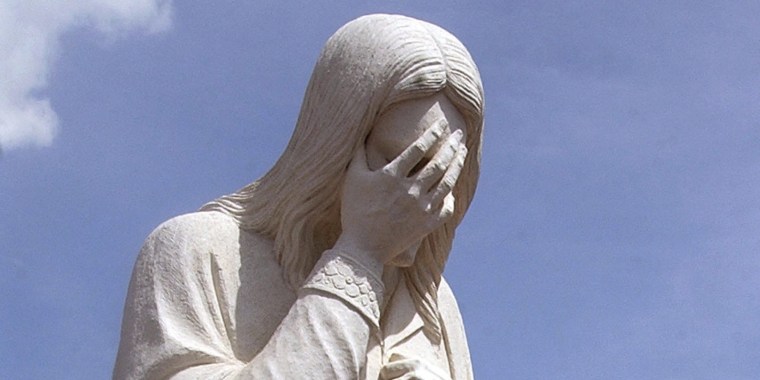
Is God not mad… just disappointed?

How do you think God reacts when we do wrong?

I asked this question to a group of 7-12 grade students from our student ministry last night. As always, I told them that there were no wrong answers. If the question asks what you think, and you say what you think, then you get the answer right. While they couldn’t possibly answer the question incorrectly – unless they were lying – I was hoping against hope that they wouldn’t answer, “I think God gets mad at us.”

And they didn’t say, “God gets mad at us when we mess up.” Hooray! Youth ministry win.

They gave the answer that I think a lot of people (including sometimes me) would, “I don’t think God gets mad at us when we mess up… It’s probably more like when we do something wrong and we get caught by our parents. Then they say something like, ‘We’re not mad. We’re just disappointed that you did this.‘ Like I don’t think God gets mad when we mess up, just disappointed.”


We’ve come a long way since the Sinners in the Hands of an Angry God theology. Most of us are passing on a view of God that isn’t this powerfully vengeful being watching over us who punishes us when we mess up. We’ve come a long way from our hell-fire and brimstone God who will throw someone into eternal damnation for swearing too much or having sex. We have replaced this angry, vengeful view of God with a view of God that is far more tame and human. In this view, God doesn’t want to punish us, God’s feelings just get hurt a lot. With this outlook, God is a friend who we didn’t sit with at lunch or a good parent that caught us in a lie.

At my private Christian middle school (circa  2007) we often unironically sang a song in chapel time called, Can He Still Feel the Nails. It goes like this:

Can He still feel the nails every time I fail?

Can He hear the crowd cry “crucify” again?

Am I causing Him pain, when I know I’ve got to change?

Because I just can’t bear the thought of hurting Him.

Yeah I know. A song that I think many would fairly deem manipulative.

While myself and many in my thought sphere have – in adulthood – laughed at the vast fallacy of that song and other sayings like it, I think we’re still walking around with much of the residue from those views. We’ve abandoned a view of God who hurts us because of our imperfection, and we have adopted a view of God who is hurt by our imperfection. So while we’ve been so right to run from this vengeful view of God, we may have sat down someplace that we need not stay.


This may get fairly philosophical for a bit. Roll with it.

I also just want to say, at a certain point, theology and theological arguments are in some sense broken and unhelpful because we cannot – though we may try – divorce ourselves from our different perspectives. So many people have different ideas and views on the Divine, and perhaps God is big enough to hold all of them. That said, I’ll try and make an argument that may be helpful.

So is God disappointed in us when we fail? Or when we don’t do our best?

A key underlying assumption to even asking this question is God cares about my own personal thoughts and actions. If God does not, then how could we disappoint God? We of course, cannot disappoint someone who does not care. So for the sake of argument, let’s say that God is concerned with me as an individual (my thoughts, actions, being).

Our view of God as a father or parental figure seems to really play into this view of a disappointed God. If growing up, my mom always told me, “Don’t smoke,” and she never saw or became suspicious of me smoking, she would likely expect that I don’t smoke. At that point, if she expects that I haven’t ever smoked, and she catches me smoking, she would be disappointed. Her expectations for me as her son were not met.

Our view of God as a friend can lead to this disappointed view of God too. If every week my friends and I play trivia on Tuesday night, it becomes an expectation of the friends in the group that I will go play trivia with them every Tuesday. At that point, if I bail on trivia, they could be disappointed with me. If I’ve never gone to trivia with them before, and hanging out with them every week is not an expectation, then how could they be disappointed?

Disappointment is a result of unmet expectations.

If we believe God is an omniscient, omnipotent being who is continually creating the universe, it seems unlikely to me that God would be anything less than fully aware of our past, current, and future pitfalls. Does God expect that we will be perfect or close to perfect? Does God even expect that we will give our best effort?

When I truly think about the bigness of God, quippy phrases like “Jesus expects our best” don’t hold up. It may make for a best selling keychain at LifeWay, but upon further examination, where do we even get that? An easy response would be to point me towards literally any of the commands of Jesus from the Sermon on the Mount. Good. But have you ever told someone to do something and not expected them to do it? Have you ever pointed someone in the right direction knowing it’s in their best interest, and still expected them to go their own way? I have, and I would argue that this is could be how Jesus felt.

Throughout the stories of Jesus that we have in the Bible, I have a hard time finding one that describes Jesus as disappointed. (Disclaimer: I could be wrong, and that’s the fun part about putting stuff on the internet.) However, I find a lot of times when people come to Jesus with expectations and leave disappointed. When the rich young ruler comes to Jesus explaining his goodness, expecting a warm embrace and pat on the back, Jesus asks for what he knows the man won’t give, obedience at the cost of his stuff. The man left disappointed. The religious leaders often came to Jesus with questions expecting to be affirmed as correct or to entangle Jesus, but they always left disappointed or even angry.

I would argue that disappointment is much more a human emotion that we feel towards God than the way God feels towards us. God lavishes love and grace upon us expecting nothing in return. No conditions. We don’t really get that because even in the purest forms of human connection, we expect some form of reciprocation. Even the best, most loving parents feel hurt when their children turn their backs on them. God is simply not this way.


To explain what God’s Kingdom and grace is like, Jesus tells the story of a younger brother who didn’t want to wait till his dad died to get his stuff and get on with it. This son goes to his dad and essentially says, “I want your stuff now, I don’t want to wait.” Storyteller Jesus doesn’t then say, “And the father was disappointed.” The father does what his son asks and gives him his share, and the younger son left. The father gave of his love and treasures with no conditions. While the younger son is off burning the candle at both ends, we don’t hear that the father is up all night weeping. Instead, what we see is a father who is waiting for his son to come home. When the younger son returns home, he expects his dad to be mad, or at least disappointed, but instead what he finds when he gets home is a warm embrace and a party. The only character in the story that is disappointed is the older brother, who didn’t understand the bigness of his dad’s love.

We are loved by God without conditions. Immense, pure love, way bigger and better than we love our girlfriends or our kids. Understanding that God’s immaculate love is unphased by our screw-ups or straight up screw-overs is going to help us let go of a whole lot of shame. Believing that we’ve in some way let down the Creator of the universe is a terribly shame-inducing way to live. And shame wrecks relationship. Our fear of disappointing God has for too long kept us from total communion with God and each other. When we feel convicted that we’re in the wrong, believing that God is disappointed keeps us from running home instead of pushing us to running home faster.

When we’ve taken God’s good things and twisted them for our own devices, God isn’t mad or disappointed, God just wants us home. A warm embrace and a party awaits.

reflecting in the new year

A new year is upon us. I feel fairly indifferent about it all. I think this is the first time in my life where I’m not excited to jump into another stage. 2018 was exactly what it was: a year. There were good days, bad days, and a lot of eh days. I learned a lot, and I grew a lot in 2018. Don’t get me wrong, I made some mistakes along the way, but that’s how we learn. I made some beautiful friends in the last year. Some days I was so content that I just wished those days would stretch on forever. Some days I was so discontent that I almost dropped everything and wanted start over in something else. Throughout all the wins and losses, the year was made special by those with whom I spent it. And I’m thankful for that.

Thinking about this blog and especially it’s contents in 2018, I am fairly happy with what I wrote and how I wrote it. Oftentimes, I’m writing as much to encourage myself to use my voice as I am to share my voice with others. Many people, maybe even most, find it more difficult to speak openly to flaws of the existing social systems than they do to affect change in their own hearts. I have the opposite problem. For me, to call on churches, governments, and others to do the right thing is much easier than acknowledging, even privately, the corners of my personhood that are not seeking justice and loving mercy.

I struggle with introspection. Strangely enough, I’m more self-reflective when I’m in the presence of others than when I’m by myself. Being self-reflective in public moments at least gives me something to talk about. I’m largely afraid of being found out to be who I most fear that I am: a fraud.

My family and close friends would be able to identify me as an often fairly disagreeable person. I remember growing up my mom would say things to me like, “If I said the sky was blue, you would say it’s not.” And she was right. My parents often referred to me affectionately as a Smart Alec, which turns out to just be the church appropriate way of calling somebody a smartass. I don’t really know at what age I became someone looking to poke holes in the rulings of authority figures, but by high school, I was in full bloom. I was never in trouble, ever, but that doesn’t mean that I was always easy to get along with. Youth pastors would be able to identify my high school self as that student who could be a great leader, but could also be a pain when they wanted to be. I quickly learned that there was always a way to pretty blatantly disobey while making it look like I had good motives. One time in high school a few of my friends and I walked out of the planned youth group events to have our own unsanctioned small group. As I made sure to tell my mom later, “We had our Bibles with us and everything,”

Of course I didn’t then have the self-awareness to understand that my desire to undermine authority figures was born out of my own insecurities. I know that now, so I have less of an excuse. I was insecure that I wouldn’t be known as smart, funny, or cool, but instead I was insecure that I would be simply known. Known to be only me, and I didn’t think that would be enough. On my worst days now, that scared teen still comes through.

What I didn’t know then was that who I am, behind the bluster and pseudo confidence, is enough. I still forget that sometimes. I often have to remind myself that I don’t have to earn my worth or have my worth voted on and judged by a panel of my peers. Any affirmation that I receive when I’m overcompensating doesn’t last in my heart because it’s not really affirmation of me, it’s affirmation of the character that I play. I need to remember that it’s ok to not know what to do and ask for help. I don’t have to have all the answers, and I don’t have to give all the answers to people who didn’t ask me what the answers were in the first place.

In the Bible in the book of Genesis, God comes to this guy Jacob in the night and God wrestles with him for hours. Eventually God knocks Jacob’s hip out of place, but Jacob doesn’t disengage, saying, “I won’t let go until you bless me!” So God blesses Jacob and changes his name to Israel, which means One who wrestles with God. Author Annie F. Downs takes this away from the story: God gives us a limp and a blessing. Our limps and our blessings are tied together, and we can’t have one without the other. For me this looks like being willing to address the brokenness and injustice of our systems (blessing) but at the same time struggling to address the brokenness and injustice inside of myself (limp). Or as Jesus might say, I am quick to attend to the speck in the eyes of others, but slow to attend to the log in my own.

The more conscious we are of our limps, the more we’re able to live into our blessings. I am enough, not because of what I’ve done but because of who I am: a person. And so are you. We don’t have to keep measuring ourselves against each other because God knows us and welcomes us without a pecking order.


So it’s a new year. And with this blog and my different platforms in 2019, I hope to put forth more introspective and vulnerable content like this. As I wrap this up, I’m aware that this isn’t the most eloquent thing I’ve ever written, but it is honest, and that’s where I need to be.

Thanks for reading!

-MC

A Push and a Promise – A Message for Graduates

This past Sunday at New Garden Church in Nashville, we had our Graduation Sunday where we affirmed and honored the achievements of our high school grads.  As the Student Minister, I got to share a message with our awesome graduates and our church.  Here’s a manuscript of the message:


Let me just say that this is one of my favorite Sundays every year.  I’m so glad to be part of a church that says we want to affirm our high school grads in front of everyone.  So grads, let me start by saying, these are your people.  And church, let me start by saying, that we have a lot to be proud of with this group.

This week, in preparation for this morning, I spent some time wondering about the question:

“What does a student graduating from high school need?”

I asked my Facebook friends, and I got some good and weird answers (as Facebook does), things like:

A Cell Phone Charger, Access to transportation, A book, and A tool box. You need to know your SSN, you need someone you can talk to, A mentor. You need money management skills, Bandaids, and Laundry detergent

When I graduated high school, I thought I needed a lot of things.  I thought I needed to go to college, I thought I needed some graduation gifts, I thought I needed a new pair of shoes, and maybe most of all, I thought I needed to get a girlfriend.  Like me when I graduated, you probably don’t have all those things.

You all have been raised in a new era.  More and more you are able to see what the world has to offer.  You’ve grown up in a world where at just the tap of a screen, you can find anything that you want, good, bad, or ugly.  You’ve grown up in a world where at just the tap of the screen, you can make someone feel good, bad, or ugly.  Some would say that the world that you’ve grown up in is a better world than some past generations, and some would say that the world you’ve grown up in is a world that is farther gone than it was before.

I think either way, you’re not ready for the world.

I don’t think you’re ready for the heartache and the conflict.  I don’t think you’re ready for the inevitable failure coming your way, and I don’t think you’re ready for those things that you can’t control.  You’re going to make mistakes, and it’s going to hurt.  And I know that on some level, you’ve already been through some stuff that you weren’t ready for.

But here’s the thing, it’s not just you that’s not ready.  Look around at all these adults, none of us were ready when we were in your position, and we’re still not ready.

And 2,000 years ago, Jesus gave his disciples a task that they weren’t ready for.

After hanging out with this group of people for three years, they surely ate over a thousand meals together, they traveled together, and they had seen many miracles done in the name of Jesus.  The sick were healed, the blind received sight, and the dead were raised back to life.  But they still weren’t ready.

After Jesus was raised back to life, he was around and appeared to different people until it was time for him to go away.  And so Jesus has these people, his friends and followers meet him on a mountain for his final words to them on earth.

We’re going to pick up there in Matthew chapter 28:

16 Then the eleven disciples left for Galilee, going to the mountain where Jesus had told them to go. 17 When they saw him, they worshiped him—but some of them doubted!

Even after everything they had seen, three years of hearing Jesus teach and watching Him interact with the world, three years of miracles, and then being witnesses to the ultimate miracle, Jesus rising out of the tomb he was barricaded in, these people still doubt!  We find it easy to blame them, but I think this shows that doubting is part of the journey.  Along the way, we all doubt our faith.  It’s hard and confusing, but it’s part of following Jesus.  Having doubt is not wrong, and it is nothing to be ashamed of.  In those times of doubt, what’s important is that we don’t isolate ourselves.  Keep the conversation going. Find people who are willing to be in that with you.  If you need someone, I would suggest taking a look around this room.

Now we get to Jesus’ final words to his followers, A pep talk of sorts.:

“I have been given all authority in heaven and on earth. 19 Therefore, go and make disciples of all the nations, baptizing them in the name of the Father and the Son and the Holy Spirit. 20 Teach these new disciples to obey all the commands I have given you. 

He starts off letting them know He is in charge.  Jesus has authority.  What Jesus has said will come to pass.  We can trust that when Jesus says something, God’s going to back it up.  

Then Jesus gives them some parting instructions: “Go and make disciples of all the nations, baptizing them in the name of the Father and the Son and the Holy Spirit. Teach these new disciples to obey all the commands I have given you.”  Now sometimes we see this and we think it means we need to move to away to find people and turn them into church people, but this is better translated “As you go” instead of simply “go.”  So as you are doing whatever comes next, make disciples, baptize, and teach.

Sounds pretty easy, right? Wrong!  These followers of Jesus were not ready!  And when we read these instructions, neither are we!  I know that you’ve grown up in church or youth group, but this is scary and confusing.  Where do we start?  What do we say?  How do we get from here to there?

Jesus doesn’t wait till we’re ready to give us a push.

But Jesus doesn’t just give his followers a command, He gives them a promise.  And that’s what I want us to be focused on today.  Jesus goes on to say:

“And be sure of this: I am with you always, even to the end of the age.”

When Jesus tells us to go out into the unknown, He doesn’t leave us.  When Jesus tells us to make disciples, baptize, and teach the world, He knows we’re not ready!  When Jesus tells us to seek justice in an unjust world, He doesn’t expect or desire that we do it alone.

When Jesus gives us a push, He also gives a promise.

There used to be a kids swimming instructor in the area who had an interesting strategy for teaching kids to swim.  If you went to her lessons and didn’t know how to swim, and refused to get in the pool, she would literally push you in.  But guess what?  To my knowledge, they didn’t let anyone drown.  The instructors were there, in the pool, for when the kid needed a hand.  There was a push, but there was also a promise, “You aren’t going to drown.”

Now I know that this season of life has a lot of potential stress involved in it.  People asking you “what’s next?” “where to?” and all those other question that you don’t have a great answer to, and even if you do have solid plans, those will likely change.  You’re not ready, but you’re not going to drown.

So today, I want to give you, and all of us, a push.  But I also want to give you a promise.

Your life is here now, and it has been here. A story has already begun to be written with your life.  As you go about what’s next, fill those pages with a life following Jesus, you won’t regret it.  And that doesn’t mean your life will be boring!  Dream big, try new things, don’t be afraid to fail!  As you transition from this stage into what’s next, keep in mind what we are called to do, share our faith with the people we encounter along the way.  There will be plenty of opportunities to fiercely love your friends and your enemies.  There will be plenty of opportunities to seek justice for those who are not treated the right way.  There will be plenty of opportunities to show humility and place the needs of others above your own.  In all of these things, I am pushing you to follow Jesus, even when it’s hard. Especially when it’s hard.

With that push comes a promise.  God will be with you always.  And that will look different at different times.  Sometimes God will give you the words to say to a friend in need.  Sometimes God will give you a friend’s warmth when you feel alone.  Sometimes God will show up right when you’re ready to give up.  God will be there.

Furthermore, I want to promise that the people of God in this room today will be there for you.  I don’t know how you feel about church or church people, and I don’t know how you’ll feel about church or church people in 5 years, 20 years, or 50 years, but I can tell you that no matter where we meet, what songs we sing, or what we call ourselves, the people of God care deeply for you.  We cannot follow Jesus on our own.  And guess what, you don’t have to be perfect or even pretty good to be with us.

I always say, that there’s nothing you can ever do to make God love you more, and there’s nothing you can ever do to make God love you less.  And we want to have that same mindset.  You are never too far gone to find a home here with us.  Never.  Our door will always be open to you.

Spider-Man, Creation, and Blemishes

Have you ever made something that you were really proud of? A masterpiece of sorts?

When I was in third grade, I created a masterpiece.

In Art class, we had a new teacher named Mr. Stevens.  He was a really cool younger teacher.  Ok maybe I don’t know how cool he actually was, but to a boy in 3rd grade, a male teacher who isn’t old and boring is super cool.  Mr. Stevens was a really talented doodler, and he loved Marvel comics.  He would always show us some of his drawings of The Hulk, Wolverine, and others.  Spider-Man was his favorite superhero.  Spider-Man is undoubtedly cool; he’s a high schooler that can shoot super strong spider webs from his wrists, climb buildings without any gear, and fly through New York City swinging from web to web and building to building.  I probably would have thought Spider-Man was cool anyway, but the fact that Mr. Stevens liked him really put me over the top.  Mr. Stevens had a ton of drawings of Spider-Man in his classroom that he would show us, most of them were of Spider-Man swinging through New York City.

So one day, after watching Mr. Stevens draw Spider-Man a few times, I decided that I wanted to give it a try.  I started with Spider-Man’s eyes and head followed by the rest of his body, very carefully making sure everything was drawn to scale.  I finished with the web and the tall Manhattan buildings in the background.  It was a masterpiece.

Mr. Stevens had inspired me to create something that took detail and time, and it was the best picture that I had ever drawn (and to this day still might be).  But it wasn’t perfect. I still remember the blue mark that I accidentally scratched onto the paper.  The drawing got partially crumpled in my classically unorganized backpack.  And there were some other spots where I had gotten a tad careless and colored slightly outside of the lines that I had created.

When I look back on that time now, I realize that this seemingly insignificant art class experience was actually teaching me something past how to draw a bomb superhero picture.  I learned that creating something is exciting, worthwhile, and takes time.  I also learned that everything we create will have its blemishes.

In Genesis, our Creator God creates humankind in the Image of God.  Our creative God created creative people.  God then blesses them and commands them to create:

“Be fruitful and multiply. Fill the earth and govern it. Reign over the fish in the sea, the birds in the sky, and all the animals that scurry along the ground.”  Then God said, “Look! I have given you every seed-bearing plant throughout the earth and all the fruit trees for your food. And I have given every green plant as food for all the wild animals, the birds in the sky, and the small animals that scurry along the ground—everything that has life.”

In the Bible, the first thing God tells people is essentially this: “I have created all of this for you. Be creative, fill it, take care of it. Go enjoy creation.

So we know how the story goes, in their creating, they make some mistakes.  They had to leave the Garden, and we call that whole tiny part of the Bible the “Creation Story.”  But God was far from finished creating, that was just the beginning.  Since then, God has continued in the task of creating and so have God’s creative people.

Since the Garden, people have created all kinds of things and very rarely gotten it right the first (or second) time!  Someone at some point figured out how to create fire and then someone found what to use it for.  People created wheels, irrigation, chariots, and now motorized vehicles, running water, and iPhones.  Each person on earth has been given both the ability and the need to create in one way or another.

I have several friends who create their own music.  That is a truly amazing thing to me.  Not only do they have to be able to play an instrument or instruments, but they have to be able to put the different sounds in an order that sounds good and also an order that hasn’t been done before.  A couple months ago I asked one of my musician friends if he thought that someday there would be no music created because everything had already been done before.  He said that he believes new music will always be created because there will always be more fusion and influence and creative people.

I like to write occasionally.  I don’t always have much to write about, but there are rare times like tonight when I can’t sleep because I have to get a thought out.  Writing is a challenge in creativity.  Much like music, I have wondered if someday there will be no new literature because there will be no more creative original thought, but the nature of God’s creation is to be creative.

When I create, there are blemishes.  No matter how well I did in English class in high school or Freshman Composition in college, when creation is involved, mistakes will be made.  Looking back at some essays and posts that I’ve written in the past, I see typos and misspellings (I literally just misspelled “misspellings” three times in a row).  I see ideas that I would word differently now than I did then, and I see posts that I simply wouldn’t write at all now.

I suppose that’s how life is too.  We move through life, and if we do it right, we create amazing and beautiful things.  We create relationships, we create systems, and we create things we’re passionate about.  But the creative process is a messy one.  As we go on living and creating in life, we’re going to make mistakes.  We are going to say something we shouldn’t have said to someone we care about.  We are going to go a little overboard and show a lack of self-control.  And we are going to end things too soon or hang on to things for too long.  These are the blemishes of life.

Often we feel the need to cover up our blemishes, but blemishes are signs of creation and life.  Others need to see our blemishes so they know that yes, we are a masterpiece, but we also are still learning and growing.  We are still being created by the Creator God who sees and knows every time we’ve accidentally scratched the canvass, crumpled things up, and colored outside the lines.  Though God sees our blemishes, God also sees and loves the larger masterpiece that we are creating.

We have been created by the Creator God to be creative people.  Don’t be afraid of messing up.  God is in the business of creating light in darkness, wholeness in brokenness, and masterpieces out of our blemishes.

life after death

I remember growing up in Sunday School and knowing everything.  Certainty was my drug of choice.  I knew the ten commandments, the 12 apostles, and the fruits of the Spirit.  I also knew the song for each.  I wasn’t ever in Bible Bowl because God showed mercy on those other kids.  I had all the answers (or so I thought).

Even those questions that no one has a firm knowledge of, I thought I knew for sure.  Like heaven.  I knew that I’d fly away (oh glory) to a mansion just over the hilltop, in that bright land where we’ll never grow old.  I knew there’s a big, big house with lots and lots of rooms and a big, big table, with lots and lots of food.  There’d be a big, big yard where we could play football because its a big, big house, and its my Father’s house.  And most of all I knew, that when the roll is called up yonder, I’d be there.

These are all positive things to think about.  It helps cope with loss, and it helps to think hopefully as we deal with worldly stuff.  But I can’t help but wonder: what is it going to be like when we die?

I ponder this a lot.  Will it be here on this planet?  Will we go up into the sky or a cloud?  People have gone up there before, but eventually they were in space, not heaven… So is it like a parallel universe?  Do we go through some crazy sci-fi portal?  Does it look like jumping into hyperspeed looks in Star Wars?  Do we just wake up there after we die?  Is it like King’s Cross from Harry Potter?  HOW DO WE GET THERE!?

This afternoon, I met a guy who told me that in November, he had a heart attack and died 3 times.  I thought that was interesting because he was standing right there in front of me looking really healthy for his age.  So I asked something I had never asked any formerly dead person before, “Did you see anything?”  In retrospect, that was probably a weird question, but I’ve been thinking about the afterlife a lot.  He said that he didn’t see anything…  Bummer!  No best-selling novel coming about some heavenly revelation from him, and no viral blog post coming from me!

So to sum my ramblings up, I don’t know what happens when we physically die, and I’m pretty skeptical of anyone who says otherwise.

Later I got to thinking about death, specifically about being spiritually dead.  I don’t know about you, but some days, hours, or minutes, I can feel spiritually dead.  Often this is a result of sin which separates us from God (To my church family, it appears that even the youth minister isn’t perfect).  And often throughout my life in those moments, I have felt the sting of shame, a product of the fallen world and a tool of the Enemy.  Shame says because I have done something bad, I am bad.  Shame can make anyone and everyone feel unworthy.  Shame and death are both results of the fall from Eden and go hand-in-hand.  Shame and death are the story of the Enemy, but they are not the story of the Almighty God.  

Even though Paul (early church missionary) wrote letters to churches 2,000 years ago, I believe there is still much life for us to reap from his words today.  In his letter to the church in Ephesus, he writes:

Once you were dead because of your disobedience and your many sins. You used to live in sin, just like the rest of the world, obeying the devil—the commander of the powers in the unseen world… BUT God is so rich in mercy, and he loved us so much, that even though we were dead because of our sins, he gave us life when he raised Christ from the dead. It is only by God’s grace that you have been saved! For he raised us from the dead along with Christ and seated us with him in the heavenly realms because we are united with Christ Jesus.”  Ephesians 2:1-2, 4-6… its in the Bible.

In Christ, we have life after death.  And it’s not because we were in good enough shape that we could be revived.  It is only grace that saves us.  ONLY GRACE!  One more time for the people in the back: ONLY GRACE!!

And this isn’t just a one time thing!  After the Spirit enters into our hearts, we are made alive!  But that doesn’t mean that we’ll never sin again.  It doesn’t mean that we will never choose death over life again, but it does mean that time and time again, we are given life!  The life that we have been gifted can never run out or be used up.  Time and time again we choose death, and time and time again, the Almighty God lavishes his love and grace on us!  

Furthermore, this is not just any old life that we have after death, we are united in Christ in the heavenly realms!  And Paul doesn’t say that we will be united with Christ when we die, but he says we ARE united with Christ Jesus!  Not “will be,” not “were,” but “are” right now!

I realize the amount of exclamation marks (!) I used in this post could be described as excessive or overbearing, but honestly, I just get excited sometimes.  The Almighty has seen us as we are, dead in sin and separated from the fullness of the love of God, and out of immense love and care, God made a way for us.

So who knows what will happen when the hearts we have stop beating and we physically die in this reality?  I certainly don’t!  But I know that every single day of our lives, the unchanging, Almighty God offers us life after death.

the blessing of wrestling

This morning I was having breakfast with a few dear friends at Chick-fil-a.

Have you ever heard a more delicious beginning to a story?

We were sitting there communing over spicy chicken biscuits, frosted coffee (it’s ice cream you can have for breakfast!), and other delicious cuisine when we began discussing something that we mutually decided that we didn’t fully understand.  Apparently we must’ve not been too quiet because a man came up to our table and began to “explain” the topic that we had been wrestling with together.  He was speaking very confidently and using large hand gestures to reinforce his point.

In that moment, we did what people do when someone gives them unwanted explanation.  We waited until he was finished and nodded saying “that’s interesting, thanks.”  As he began to walk away, he looked back and said, “I’m a minister to men.”  I guess what he probably didn’t realize was that the four guys he was talking to are also identified as ministers by church title.  Of course, all followers of Jesus are called to be ministers to others.  Stating that he was a minister as he was walking away seemed to be his way of expressing that he was some sort of authority on the matter.  It was frustrating to me, but I couldn’t really understand why in the moment.

Whether or not this man was correct in his explanation is beside the point.  I guess I was bothered because sometimes we, especially those of us who are referred to as ministers, pastors, or teachers, can try and explain away the mystery of God.

Growing up in church is different than growing up outside the church and coming to faith later.  For me, growing up in church was an exercise in knowing about God.  I believed that I could know everything about God.  I believed that there was someone out there in the world who knew more about God than anyone else, some sort of super Christian or God’s right hand man.  In a way I believed that God delighted in people knowing his stats much like how I can recite the names and numbers of obscure former Tennessee Titans players.  I looked at my dad and thought, “He probably knows more about God than most anyone else, after all, he has a couple degrees in the Bible.  He carries around a Bible with an ancient language in it.”  I looked at my youth minister and thought, “He must know a lot about God, he teaches us twice a week!”

So going to a Bible college myself to study the Bible seemed like a great way to fill my brain with knowledge about God.  Surely that was pleasing to God.  A few years in to my studies in college, I had a harsh, semi-painful realization.  More study of the Bible was not answering all my questions, it was providing more difficult questions that were not as easy to answer.  There is a difference between knowing about God and knowing God.

Looking back, I can identify this as a period of some faith “deconstruction.”  Deconstruction is a word that I had never heard used as a healthy thing regarding faith.  Wouldn’t you want your faith to be constantly constructing!?  Always building taller and taller so that it may reach new heights?  I think this period of deconstruction is natural and happens to all of us in one way or another.  Luckily for me, I did then and still do find myself in communities that are affirming of my questions.

Think about all the times people asked questions of Jesus.  Time and time again people come to Jesus asking questions.  These questions have all kinds of motives, some seeking, some to trap him, and some rhetorical.  Time and time again, Jesus does not answer these questions with a concrete answer that removes the mystery, but instead Jesus answers with another question, tells a story, or remains silent.  Jesus was not a cookie cutter, fill-in-the-blank teacher.  Jesus was a teacher who asked probing questions with which His followers wrestled.

As a community of Christ followers, we must give both ourselves and each other space to have questions and not have answers.  Naturally this is terrifying because we are an anxious people who need to know everything all the time.  That’s why Google is a thing, right?  So we can just Google anything that we don’t know.  And even more than in other realms of our life, our churches can seem like groups of people with whom we are uncomfortable expressing doubt or posing a tough question.  Here’s the thing about that: people will wrestle with doubt and questions regardless, but will they do that in the context of a people who believe that God is big enough for our questions, or will they have to leave our faith communities to ask their questions? 

We cannot place God in a box.  I am a minister who works in a church, and guess what?  I don’t have all the answers.  I went and got that degree in “Theology and Ministry” and guess what?  I am right there wrestling with everyone else.

So let’s try something.  And I’ll try and do this as well.  Next time someone expresses a question or doubt, let’s not be so quick to answer.  Life following God is a mystery.  Let’s spend some time in awe of the mystery of the Almighty God.  I think we will find that there is a blessing in wrestling with God.

-Michael


AN ASIDE:

What is it with Chick-fil-a and people trying to explain deep mysteries of God with lackingly short and easy quips?  I once overheard a man at Chick-fil-a attempt to explain the Holy Trinity to a 12-year-old using the metaphor of a buffalo sauce packet.  Don’t get me wrong, I love buffalo sauce, but I think even buffalo sauce in all of its splendor pales in comparison to the Holy Trinity.

The Pledge and Playing it Safe

Before I start, I just want to say that writing this is not easy. I’m well aware that many friends, family, or fellow Christians may disagree with me, but I also know that I am not always called to be agreeable. And I write this because I believe it to be truthful in my life. If I do end up posting what I write, I pray that God will do what He wills with it. God always seems to do that.

A teacher in school once told our class, “Never begin a speech or a paper with a definition.” BUT these teachers always said, there’s exceptions to every rule, and when we were a big-time author we could break the rules. I’m not a big-time author, but I do have my own, free-to-use blog that my mom may read, so I’m just going to break the rules anyways…

Merriam Webster defines allegiance as “devotion or loyalty to a person, group, or cause.” Now growing up in the U.S., the first thing I think of relating to allegiance is the “Pledge of Allegiance.” We all know it by heart. We grew up reciting it every morning in our schools. In elementary school, does anyone actually know what they’re saying? I remember thinking there was a word in the pledge that was “witchit.” I did not know what it meant, but we said it every day, so it had to mean something. As it turns out, that is actually two words “which it.” The whole thing goes like this:

I pledge allegiance to the Flag of the United States of America, and to the Republic for which it stands, one Nation under God, indivisible, with liberty and justice for all.

I don’t know why it seemed so long in school. Maybe because it was the morning? I am not much of a morning person. Or maybe it was because time seems to pass faster now? Who knows. Anyway, that’s what we said, every single day. Then when I was old enough to go to Church Camp, we said it there every morning as we raised the flag. This just seemed to me like part of life in this country, and I didn’t think another thing about it.

Well at least I didn’t think about it for a while. I graduated a year and a half ago from a school named after a preacher of the American Restoration movement, David Lipscomb. In learning about his life and his work, it struck me how he was unwavering in his stance that his citizenship was in the Kingdom of God, not in this country. Lipscomb did not take part in elections, and he also was a strong voice for nonviolence. Growing up in Christian circles, I had never heard this idea. Perhaps I thought that a good American was a Christian, and a good Christian was a “patriotic” person. For many older people with more life experience than my generation, some may view this country as a shining light of freedom in a world of darkness.

I have a hard time rectifying this vision of the U.S. as a beacon of hope with God’s vision of the Church. In Matthew 5, Jesus is preaching to the people.

“You are the light of the world. A town built on a hill cannot be hidden. Neither do people light a lamp and put it under a bowl. Instead they put it on its stand, and it gives light to everyone in the house. In the same way, let your light shine before others, that they may see your good deeds and glorify your Father in heaven.”  -Matthew 5:14-16

This tells me that God’s light of the world is His people: the Church. God is calling His people to do good deeds to bring glory to the Father. We are God’s people. Many of us know of other Christians in other countries, and they are no less part of the Kingdom of God than anyone who lives in this country. So we, God’s people, are to be a light, I get that. What else is required of us? Jesus goes on his sermon, and he teaches on taking care of the poor, prayer, fasting, and finding our treasures in heaven. Then he says this:

“No one can serve two masters. Either you will hate the one and love the other, or you will be devoted to the one and despise the other. You cannot serve both God and money.”  -Matthew 6:24

This is a painful teaching. Of course Jesus is talking about money here, but He is also talking about many other things that may become a master of our life. This teaching refers to power, sex, relationships, sports, and yes, the powers and authorities of the world. Occasionally, our country and God may have similar interests, but that is certainly not something that is consistent. God wants all of us, 100%, to be devoted to Him. Jesus’ message does not really attract those who only want a hobby.

This complete devotion that Jesus is requiring brings me back to the idea of allegiance. If we are completely devoted to following Christ, then our allegiance belongs to the Kingdom of God. I don’t believe myself capable of having multiple allegiances. At some point, we will make decisions that show where our devotion is, and I do not feel called to pledge my allegiance to a flag or a country. Believe me, this is not something that I really want to share on the internet. This idea has been banging around in my head for a few years now. I can no longer pledge allegiance to the flag and our country with a clean conscience.

This is not something I have decided based on the current political landscape or the many athletes who have taken a knee during the national anthem.  Throughout Scripture, God is calling upon His people to serve Him only.  All kids raised in church have to memorize the 10 Commandments.  Commandment #1: “You shall have no other gods before me.”  Commandment #2: “You shall not make for yourself and image in the form of anything in heaven above or on the earth beneath or in the waters below. You shall not bow down to them or worship them, for I, the Lord your God am a jealous God.”  So maybe you don’t see standing, placing your hand over your heart, and pledging your devotion to a man-made object and human construct as idol worship?  OK, but its at least similar, right?

Then I look at a story from the book of Daniel about these three guys Shadrach, Meshach, and Abednago.  Here these guys are living in a foreign empire and the king has a giant golden statue of himself made (a sign of empirical supremacy).  He decrees that everyone must bow down to this statue or be thrown into a furnace and burned alive.  So the time comes and everyone is gathered together in one place.  The instruments are played and everyone starts to bow, everyone except these three guys.  Can you imagine the looks even from other God-fearing people?  Can you imagine the whispering from their friends?  “Just bow and get it over with! It doesn’t mean anything! Just play it safe and do what you’ve gotta do!

Maybe you’ve heard, “Just play it safe and do what you’ve gotta do” before.  Maybe it was something at work that you just had to do to keep your job.  Maybe it was going along with the racist joking of a group of people because you were in the minority and didn’t want to be “that guy.”  There’s many times in our lives where we feel this pressure to play it safe and conform, and we are even advised by our friends and family to do so!  But I have been trying to think of a time where Jesus advised playing it safe, and I’m struggling to think of a time.

So anyways, the King has these three guys brought in and, to paraphrase, says, “I’m dead serious, I will throw you into the furnace if you don’t start playing along.”  Shadrach, Meshach, and Abednago, go on and tell this King that they believe God can deliver them from any harm, OH AND ALSO, and here’s the kicker for me, they say “But even if he does not, we want you to know, Your Majesty, that we will not serve your gods or worship the image of gold that you have set up.” *mic drop*

So now they’ve really done it!  The King is ticked!  He has the furnace made 7 times hotter than normal, ties them up and tosses them in there.  Then he looks in and sees 4 people in there, even though he only put 3 in… and the new one “looks like a son of the gods.”  They aren’t getting burnt up and their bindings are gone.  So the King has them brought out, and then goes on to praise God and decrees that “the people of any nation or language who say anything against the God of Shadrach, Meshach, and Abednago be cut into pieces and their houses be turned into piles of rubble, for no other god can save in this way.”

Not only did Shadrach, Meshach, and Abednago stand up for their convictions, but God used that to change the heart of the most powerful person in the world.  When we give a little, God multiplies it!

So all that to say, we are not called to play it safe or be agreeable.  We are not called to give our devotion to any earthly government or symbol of that government.  We are called to give 100% of our allegiance to the Almighty God, the only God who can save.

And I’ve had this post sitting in my drafts for 8 months, playing it safe, but today God gave me courage.  And let’s be honest here, I don’t have a wide readership.  And I stand at no risk to face imprisonment or any formal punishment because our country doesn’t do that, so how big of a risk am I really taking here?  But we can only be faithful with the platforms that we have been given.  We aren’t given the luxury of choosing what to care about. God tends to put stuff on our heart that won’t go away until we do something about it.

Also, I do not tell you this to start a movement. I simply tell you this because I had to. Maybe what I have written will make you think, and maybe you’ll read this and disregard it completely, that’s fine. I appreciate you hanging with me till the end.

Image of God or Demogorgon?

We all carry around some sort of Identification.  If you want to drive legally on the road, you need a driver’s license.  Many places of work require you to carry some sort of ID.  And these days, if you’re a student, you have to have an ID card made and carry it around.  These pieces of identification almost always have a picture of our face on them. Our face is how people identify us.  We put our face in our profile pictures for Facebook, Instagram, and Twitter so that people will recognize us.  Our face is in many ways synonymous with our identity.

But when we meet someone and we’re telling them about ourselves, we don’t show them a picture of our face.  We try and explain to them who we are.  For instance, if I meet someone, and I ask them to tell me about themselves they might say something like this:

“My name is Steve, I’m an accountant.  I grew up in Atlanta but now I’m living here in Nashville.  I went to Vanderbilt and that’s where I met my girlfriend Natalie.  I love backpacking and going to sporting events.”

And this is a perfectly fine way to describe oneself to someone they’re just meeting!  But lately I’ve been thinking about how we identify ourselves to ourselves.  

Throughout my life, I have done this in many different ways.  In elementary school I told myself that I was wicked smart.  I was a wiz at multiplication tables.  I had some showdowns with fellow classmates, but I was quite confident in my abilities.  However, when I failed to win a spelling bee for two straight years, I decided that maybe that was not my identity.  And then I thought I could be good at sports.  If you’ve met my parents, you know that I have been blessed with tall-person genes.  For whatever reason, I missed out on that biological pot of gold and wasn’t much of an athlete.  To give you a tweet-length scouting report on my football playing career it would be “Has a good low center of gravity, it just doesn’t move with much speed.”  So as many kids like me do, I developed humor as a way to fit in with the cool kids.  And throughout high school this was my go-to identity.  Since then, I’ve found my identity in many other things along the way.

I re-watched Stranger Things this week in anticipation of season 2 coming out soon.  (For those of you who don’t know, Stranger Things is a sci-fi thriller show on Netflix.  If you really wanted, you could watch the whole thing in one sitting.  8 episodes, 6 and a half hours of pure unadulterated distraction from the things in life that really matter)  VERY MINOR SPOILERS AHEAD…

In the show, people are disappearing, and a few of the townspeople spot a monster.  They describe this monster as a creature, kind of shaped like a man, without a face.  The “Dungeons and Dragons” loving characters in the show refer to the monster as the Demogorgon.  This faceless monster, the Demogorgon, is led by its impulses, consuming whatever grabs its attention.

And today, I just got to thinking, “Aren’t we like that sometimes?”  For the record, it’s never a good sign when the character that you identify with in the show is a bloodthirsty monster.  But there are times when I’ve felt this way.

See, when we are placing our identity in something, whether it be a job, a skill, a relationship, or a life goal, that in a way becomes how we identify ourselves.  It becomes our face that we can see and picture.  And most of the time, those things are not permanent.  We deal with loss, failure, and change, and all of a sudden, that thing by which we used to identify ourselves has been stripped from us.  We are left without a face.  In these seasons (days, weeks, months, years) we feel unrooted and unhinged, and we immediately want to jump and latch onto something else that we can identify ourselves by.  We want to find another job, skill, relationship, or goal we can merge ourselves with.  We scramble around seeking to find something to fill that leak in our hearts that had been filled with only a temporary plug.  And if you’ve been there, you know exactly what I’m talking about.

Instead of scrambling, we have to sit.  We have to sit in the quiet and the darkness and wait for the Lord to remind us who we are.  And then, once we have slowed down and leaned in closer to the Lord, we may feel the presence of God reminding us that we bet on the wrong horse or horses.  We have spent way too much time clinging to the identity that we found in the things of creation, instead of the identity that we have been given in the Creator. In the beginning, we were created in the Image of God.  And we are loved deeply and fully by the Almighty God who sees our flaws and insecurities.  God’s love for us is perfect.  In Him, we are both fully known and fully loved, yet we spend our time seeking after imperfect affections from the people and systems who don’t and can’t fully love us.

Let us spend time diving deeper into the depths of God’s perfect love for us.  God has given us a unique face and identity.  We are each created in God’s Image, and together we are a masterpiece and small glimpse of the glory of God.  Let’s pray that everything that we do flows out of that foundational identity.

We are loved beyond measure by a God who knows everything about us.

Leading with Love

So maybe you have heard over the past few days about the Nashville Statement.  I honestly don’t know how widespread it has become, but as someone who works in a local church, I guess I might be more likely to have heard about it or read it than some others may be.  If you haven’t heard, a group of evangelical faith leaders met in Nashville in order to come to some sort of consensus on a doctrine regarding sexual stewardship.  They released this 3-page document this week in the midst of nationwide concern for Houston.  Besides Houston, there has been many other tragedies in the U.S. recently, for example, the show of hatred and evil in Charlottesville 3 weeks ago. Much of the Nashville Statement is directly in relation to the LGBTQ+ community.  If you’d like to read the document, you can find it here.

I know, you are all still reading this to find out all about my beliefs regarding marriage and God-honoring sexuality, but that’s not why I am writing today.  I will say that wherever you come down on these issues, I would try my best to understand your beliefs and how they have formed or changed throughout your life.  I write this today because I think many are missing the point as I did when I read the document the first time.

I can honestly say that I know some wonderful, absolutely good-hearted people who fall on either side of the debate regarding the Church’s affirmation of those who have accepted non-traditional sexual lifestyles.  And I do not write this to offend or send anyone into shock.  I write this because I believe that the overwhelming majority of the current dialogue regarding the Nashville Statement has not been fruitful.  There have been a lot of voices falling on deaf ears.

Before I go any further, let me clarify: I 100% believe that members of the Body of Christ have a responsibility to other members of the Body to hold each other accountable to live lives according to the calling that we have received as followers of Jesus Christ.

And now let me say: the only way in which we can or should hold each other accountable is within the context of a faith community in loving relationship with each other.

Think about it this way, has anyone that you did not have a relationship with ever scolded or chastised you?  I would assume that was not an enjoyable experience.  Has anyone that you don’t know ever said to you, “I’m not trying to tell you what to do, but…” That probably did not make you feel good.  Throughout my life, I have often resented being told what to do.  I’m working on maturing and growing, but man, that’s the worst!  Now certainly, there are times in my life where I need guidance, and I’m even learning how to ask someone else for their input (what a novel concept), but I will only receive correction well from someone that I know loves me.  Maybe this is just me, but I would bet you have felt similarly.

As followers of Christ, we are trying to be like Christ, right?  If that’s the case, we need to look at the way that Jesus lived to inform every aspect of our lives.  In Luke 19, there’s a story that I think really applies to this topic:

Jesus is traveling with his disciples through Jericho, and there’s a ton of people trying to see him.  There’s this short tax collector (social stigma implied) in town named Zaccheus, and he really wants to see Jesus, but he can’t see over the crowds, so he climbs up in a tree just to catch a glimpse.  Jesus sees Zaccheus up in the tree, and calls out to him, “Quick, come down! I must be a guest in your home today!”  Ecstatic, Zaccheus takes Jesus to his home.  But the people were not happy with this.  They grumbled to each other, “He has gone to be the guest of a notorious sinner.”  That day, Zaccheus’s heart was transformed.  Because of his interaction with Jesus, who just went over to his house, he vows to give half of his money to the poor and to repay anyone he has cheated four times over!

So let’s think about this story.  I would bet that Zaccheus knew that the religious folks disagreed with his lifestyle choices.  But guess what, knowing that a bunch of religious people didn’t like him really didn’t make him want to change.  All Zaccheus needed for radical life change was to interact with the transformative love of Jesus.  People in our world could use a little more of that.

When dealing with people, Jesus always lead with love.  He befriended many other “notorious sinners.”  Jesus offered the Samaritan woman caught in adultery living water!  Jesus had a quality about him that not only tolerated those who had been outcast by the religious establishment, but he attracted them!  You know what’s not attractive?  Someone that you don’t know telling you that you’re a sinner.

So let me bring this back to the Nashville Statement.  Whatever side you find yourself on, there are real people, living breathing people, on the other side who legitimately believe that what they are standing for is right.  People on every side of this issue are created in the image of God, and there are devoted followers of Christ who are still developing thoughts and views on these matters.  We cannot let this be divisive in our faith communities.

Too many times, we, Christians, divide ourselves into different camps.  We split ourselves by how we like to worship, our views on the Eucharist, our traditions, etc.  And in the midst of a world that has an immediate need for the love of Jesus, we have found yet another thing that divides us instead of unifies us.

We need to be known more by what we are for than what we are against.  We need to be identified by our love for one another, our neighbors, and our enemies.  We need to be identified by our desire to lift the lowly, welcome the outcast, and break the chains of the oppressed.  

And yes, we need to be having these important discussions in our faith communities regarding our views on these topics.  But any view that does not begin with a love for God and for our neighbor is not a view that is from God.  These topics need to be wrestled with in our faith communities, but not on Facebook or Twitter.  These are not topics to make decrees about.  These are conversations to be had together in homes and at coffee shops, not on the internet for the whole world to see.  And when we do have these conversations, we must give each other permission to still be working it out in our hearts.

I must say that when it comes to withholding grace from those with whom I disagree, I am the chief of sinners, but I am encouraged because through the grace of God I know I can grow in that way.  I pray that I will be a person who leads with love, and I pray the same for all of us.

Only through the power of God’s grace can we truly become people who can speak truth in love.