Tag Archives: Acts

Responding to Nudges – Acts 8:26-39

Good morning everyone, I’m glad that you’re here with us at New Garden today. Last week, we were practicing the spiritual habit of sharing a meal together at Brunch, so let me provide a little refresher as to what we’ve been talking about.

In 2025, we’ve been talking through Acts each week. Looking at the Apostles and the earliest followers of The Way as examples (or in Ananias & Sapphira’s case, bad examples) of how to be attentive to the Holy Spirit and dependent on God for movement & growth. Two weeks ago, Josh explained how the church was committed to taking care of each other and remaining unified despite their cultural differences. In chapter 6, they appointed 7 people to address a certain issue regarding equity in their practice of sharing food together.

One of those 7 guys, Stephen, is a main character in chapter 7 as he calls the religious leaders to account, explaining how their ancestors had rejected the prophets of Israel, finishing by telling them that that now they had murdered the Righteous One, Jesus. Then Stephen looked up to heaven and saw Jesus looking down while standing at the right hand of God. This was maddening to these religious leaders, so they drug Stephen out and stoned him. This began a great persecution in Jerusalem for followers of Jesus, led by a guy named Saul, who we’ll talk more about in the future. Because of this persecution, the followers of Jesus were scattered and many left Jerusalem. That’s where our story picks up today in Acts chapter 8, with another guy named Philip.

Let’s pray before we go further today.
Lord, thank you for being here with us today. Thank you for the cloud of witnesses that have gone before us and modeled the way of Jesus for us like Stephen and Philip. God give us that same steadfastness, courage, and passion that they had. If there’s anything said today that is from me and not from you, God, help it to be removed from our hearing. Thank you for Jesus, and help us to be more like Him. In Jesus Name, Amen.

__________________________________________________________

Acts 8:26-39

26 
Now an angel of the Lord said to Philip, “Go south to the road—the desert road—that goes down from Jerusalem to Gaza.” 27 So he started out, and on his way he met an Ethiopian[a] eunuch, an important official in charge of all the treasury of the Kandake (which means “queen of the Ethiopians”). This man had gone to Jerusalem to worship, 28 and on his way home was sitting in his chariot reading the Book of Isaiah the prophet. 29 The Spirit told Philip, “Go to that chariot and stay near it.”

30 Then Philip ran up to the chariot and heard the man reading Isaiah the prophet. “Do you understand what you are reading?” Philip asked.

31 “How can I,” he said, “unless someone explains it to me?” So he invited Philip to come up and sit with him.

32 This is the passage of Scripture the eunuch was reading:

“He was led like a sheep to the slaughter,
    and as a lamb before its shearer is silent,
    so he did not open his mouth.
33 In his humiliation he was deprived of justice.
    Who can speak of his descendants?
    For his life was taken from the earth.”[b]

34 The eunuch asked Philip, “Tell me, please, who is the prophet talking about, himself or someone else?” 35 Then Philip began with that very passage of Scripture and told him the good news about Jesus.

36 As they traveled along the road, they came to some water and the eunuch said, “Look, here is water. What can stand in the way of my being baptized?” [37] [c] 38 And he gave orders to stop the chariot. Then both Philip and the eunuch went down into the water and Philip baptized him. 39 When they came up out of the water, the Spirit of the Lord suddenly took Philip away, and the eunuch did not see him again, but went on his way rejoicing.

I’ve heard this story preached several times in my life. It’s one of the more familiar stories in the book of Acts. And I’ve heard a lot of takeaways from it. I’ve heard it preached as how we – like Philip – should always be ready to share our faith. I’ve heard this used as a text on baptism: look, here is water. What can stand in the way of my being baptized? I’ll quickly say that both of those are fine and good! We should be walking around the world ready to talk about our faith, I think too often we relegate faith conversations to church only, when telling people about our lives should include ways in which we experience God. And baptism is a beautiful thing – committing and joining ourselves to the mission of God unfolding around us. If you are thinking about baptism, I really want to talk to you about that. And I want to invite you today to consider baptism. I have some resources that could help us walk through what that means together if you’re interested in learning more.

But in all the times I’ve heard this story told or preached before this week, the fact that this guy Philip encounters on the road is a eunuch from Ethiopia is sort of mentioned but not explained. And I don’t plan on explaining too much today about what a eunuch is, no diagrams to show or anything like that, but I think who this man is is really important to its inclusion in Luke’s account of the early church.

This is one of those times when I think the meaning can be lost on us because this was written 2000 years ago, and we don’t feel the weight of what Luke lays out before us. We have access to information that could help inform us, but we don’t automatically understand when we hear it. So briefly, here’s some context.

It’s pretty clear that this eunuch wasn’t born into Judaism. If he was, he likely wouldn’t have become a Eunuch in the first place. What we do know about him is that he was a treasurer for the Queen of Ethiopia. And so it’s likely that he became a eunuch for the sake of professional advancement, though it’s obviously a sacrifice in other ways. I read this week that oftentimes, people would have to become eunuchs in order to work with the royals to ensure that the royal bloodline didn’t get murkied. So this was a person who was dedicated to his professional advancement, and was willing to sacrifice other things about his life to that end. At some point this guy must have converted to Judaism, because Luke tells us that he was on his way back from worshipping in Jerusalem.

Unfortunately, this man may have had an unpleasant or lacking experience in Jerusalem. We learn in the Old Testament, Deuteronomy chapter 23, that a eunuch wouldn’t have been allowed in the Temple. No one who had been quote “emasculated by crushing or cutting would have been allowed inside the Temple.” And yet, here is a man committed to his faith, trying to learn the Scriptures, even if he was kept at arm’s length by his faith community.

And then we have Philip, who was one of those 7 guys that they appointed to help make sure that the church’s eating practice was inclusive of people who had different culture. In verse 26, as persecution of the church is breaking out in Jerusalem, an angel comes to Philip and tells him to head south, away from Jerusalem. Philip listens and heads south.

As Philip goes along the road, he’s attentive to the Spirit. That’s key to this story. Throughout the book of Acts, we have seen how God moves and we’ve seen how these early followers of the Way were paying attention enough to respond to God’s movement. Philip is set up for success in this story because Philip was attentive to what God might be up to in his midst.

This is one reason why we shared last week at Brunch how we have seen God lately. That was really cool, wasn’t it? I loved getting to hear how you all are seeing God. We heard beautiful stories of recovery, healing, growth, and connection. The more we hear how God is working in other people’s lives, I’m hopeful that we will be better able to recognize how God may be showing up in our lives.

So as Philip heads South, he is attentive to the Holy Spirit, and he gets this nudge from the Spirit: Go over to that chariot and stay close. Once again, Philip is listening and responds. He runs up to the chariot and hears this man reading Scripture aloud.  Philip recognizes the Scripture as part of the Isaiah scroll. And, you know, I think I recognize that moment that Philip is in. That moment where someone is sticking out to you. You recognize them or you feel that there could be a reason that you are noticing them specifically. Maybe this is at the store or at a work thing or whatever, and you feel this nudge… More times than I’m pleased to share, I must confess, I back away from this nudge. I avoid. I walk away. This situation wasn’t part of my plan for the day. But I must say, I’ve never regretted leaning into the moment like Philip does here.

So, Philip asks this man if he understands what he’s reading, and this eunuch responds, how could I unless someone explains it to me. In other words, you are just the person I needed to run into, come on up into the chariot! And Philip takes what this man is reading and walks him through how Jesus is the one that the prophets were talking about and how he had come to bring about a new Kingdom in which all may have access to God!

And I think that the question this eunuch asks Philip is really simple, but sort of profound: Look, here is water. What can stand in my way of being baptized? Remember, as a eunuch there were barriers between him and the full Jewish experience. He was in the faith, but he wasn’t allowed in the Temple. He was held at arms distance, but in Christ, that doesn’t matter. Before, there were things that were standing in his way, but in Christ, those things that have kept us apart, don’t any longer. And so he and Philip go down into the water where he’s baptized.

This is a really cool story, and there’s a lot of layers that I think we could pull apart and a lot of things you could read about it that you might find interesting, but here’s my main takeaway: The Spirit is already working in people’s hearts all around us. God is in the business of drawing people in, and God is at work in people’s hearts long before they have an interaction with you or me.

God is even at work in people’s hearts that we might view as outsiders. People who we don’t have a single thing in common with. This eunuch is a foreigner in Israel, he’s of a different race than the Jews and Gentiles in the area, he’s lived this very different lifestyle than Philip, and yet, God has been at work in this man’s life. He had already converted to Judaism at some point and here we see this guy has a thirst for more, he has this passion for God having traveled about 1500 miles in a chariot to worship in Jerusalem.

I think something that holds me back from being attentive to how God is moving in our world is my cynicism. Maybe that resonates with you and maybe it doesn’t. But sometimes I think to myself, there’s no way God would work through that group of people… We live in a tribalistic world with a lot of us and thems. Even among Christians, there’s so many divisions between groups. But may I be so bold to suggest that God can work in the thems too. And maybe every once in a while, we could be educated or encouraged by how God is working among other people.

God is moving. In ways that we can feel and see, yes, but even more in ways that we can’t see and couldn’t put together ourselves. Can we be more like Philip? As he had been living in Jerusalem, I’d be willing to guess that he didn’t know a lot of African eunuchs, and yet, he didn’t hesitate to trust in what he felt God was leading him to do. Philip was attentive to the Holy Spirit, and responded accordingly.

And guess what, God is not going to give you something to do that is bad for you. Maybe not every time you lean into the moment and respond to the Spirit will result in a story of immediate conversion, but over time God will use those moments to transform us and the people around us. This may look like giving someone a jumpstart in the Kroger parking lot. Texting an old friend that you want to get with them soon. Showing kindness to the referees at your kid’s soccer games. It may look like signing up with NICE to give refugees rides to their appointments.

As we take seriously our commission to make disciples as we go throughout our lives, having waited on the Spirit to guide us, God will heal our relationships, strengthen our communities, and connect individuals and groups that we wouldn’t consider inviting to the same dinner parties. God is at work both in us and in the world around us. Let’s be people who are attentive to how God moves and people who respond and join in with what God’s doing.

As we go to these Tables around the room together today, all are welcome to join us there. Regardless of where you’re from, where you’ve been, whether you’ve been here for years or you are here this morning by accident, we’re going to share a meal together with Christians this morning all over the world as we remember Jesus, eating this bread which represents his body and drinking this grape juice which represents his blood. We remember how Jesus dined with all sorts of people, religious leaders, social outcasts, rabble rousers, tax collectors, fisherman, and known sinners, sometimes at the same table.

Let’s pray and we’ll go to the Table together:
Lord, thank you for working in our world in ways that we can’t expect or wouldn’t choose ourselves. Give us the courage and boldness to lean in to the nudges of the Holy Spirit this week. As we go to the Table, help us to be transformed each week into being more and more like Jesus. In His Name we pray, Amen.

This sermon was delivered on February 16th, 2025 at the New Garden Campus of Woodmont Hills Church. You can watch it here.
Bearing Witness – Acts 3-4

Good morning! Today we are continuing our series as we start the year in the book of Acts. If you remember, Acts is the story of how God worked to form and grow this small group of Jesus’ followers into a multi-cultural, multi-national group of churches. A couple weeks ago, we talked about how Jesus’ command to his disciples in Acts 1 is to wait for the Holy Spirit. How we should be people who are attentive to where the Holy Spirit is leading us. Last week, we talked about how being led by the Spirit, this group of Jesus followers took on this lifestyle that looked different from the people around them as a response to the work of the Spirit in their midst. Today, we’re going to see how these apostles bear witness to the movement of the Spirit.

Let’s pray before we go any further:
Lord, thank you for our time together today. Thank you for using this weekly gathering to encourage us and form us into people who are more like Christ. If there’s anything from me today that’s not from you, God, I just ask that you will remove it from our hearing. Give us a message today that can plant itself in our hearts and grow us into who you want us to be. Thank you for Jesus, in His name we pray, Amen.

______________________________________________________________________________

Acts 4:1-14
The priests and the captain of the temple guard and the Sadducees came up to Peter and John while they were speaking to the people. They were greatly disturbed because the apostles were teaching the people, proclaiming in Jesus the resurrection of the dead. They seized Peter and John and, because it was evening, they put them in jail until the next day. But many who heard the message believed; so the number of men who believed grew to about five thousand.

The next day the rulers, the elders and the teachers of the law met in Jerusalem. Annas the high priest was there, and so were Caiaphas, John, Alexander and others of the high priest’s family. They had Peter and John brought before them and began to question them: “By what power or what name did you do this?”

Then Peter, filled with the Holy Spirit, said to them: “Rulers and elders of the people! If we are being called to account today for an act of kindness shown to a man who was lame and are being asked how he was healed, 10 then know this, you and all the people of Israel: It is by the name of Jesus Christ of Nazareth, whom you crucified but whom God raised from the dead, that this man stands before you healed. 11 Jesus is
“‘the stone you builders rejected,
    which has become the cornerstone.’[
a]

12 Salvation is found in no one else, for there is no other name under heaven given to mankind by which we must be saved.”

13 When they saw the courage of Peter and John and realized that they were unschooled, ordinary men, they were astonished and they took note that these men had been with Jesus. 14 But since they could see the man who had been healed standing there with them, there was nothing they could say. 

So let me try and set the stage a little bit for what we just read. Before this, in chapter 3 of Acts, Peter and John are heading up to the Temple when they encounter a lame man, a beggar who asks them for money. Peter and John tell him we don’t have any money, but in the Name of Jesus, get up and walk. So, he gets up and he’s rejoicing! This miracle just happened. All three of them head on into the Temple and the people around are going crazy. Not every day you see a miracle happen, and they know it to be a miracle because they know this guy, they’ve seen him there day after day, and now all of a sudden here he is walking around with these two other guys saying he’s been healed.

Well of course, this draws a lot of attention to them. People are starting to think that this Peter & John guy are miracle workers. God has worked in a mighty way, and instead of accepting even an ounce of credit, Peter quickly lets the people know what really happened. He says this miracle wasn’t by us. That guy that was crucified, that you all wanted to be crucified, he’s the reason for this. And the truth is that most of you didn’t know any better when Jesus was put to death, but now you do. So if you are having a change of heart and want to undergo a heart and life transformation, now is the time. All those prophets you know about in Israel told your ancestors about this guy. Jesus was legit, the real deal. So come get on board and be renewed.

Peter and John had waited for the Spirit to arrive, and they had been attentive to the Spirit, and they just participated in this miraculous moment of healing, and now they are bearing witness to that. They aren’t willing to accept any praise from this. They are taking this moment of wonder and awe and pointing the people towards the good news of Jesus.

This is what we are going to see over and over as we work through Acts over the next couple months. People are attentive to the movement of the Holy Spirit, God moves in power through healings, prison breaks, and blinding lights, and the people of God bear witness to what God has done. Amazing things happen, and the people of God aren’t quiet about it. They step out and let people know that God is responsible, inviting those around into a renewed life.

And this is where chapter 4 starts…
While Peter and John are testifying to the Lordship of Jesus and the power of the Spirit to enter our world in mighty ways, the religious leaders step in. Peter and John are preaching this good news of resurrection and they don’t want that spreading around. That would mean that they were wrong in their assessment of Jesus. This could unseat these religious leaders’ place in society, and that’s not what they want! So they take Peter and John and throw them in jail. But these religious leaders were too late, a bunch of people heard and accepted what Peter and John were proclaiming, the church grew.


So the next day, they bring Peter and John in from jail and ask them “by what power or what name did you do this?” See there’s no debate that this did indeed happen. That crippled beggar who has been hanging out by the gate near the Temple, now he’s walking around. There’s no debate that it happened, they just want to know, how do you explain such a thing? And I wonder what in their mind they were hoping Peter and John would say. I don’t know, but what I do know is this: Peter and John once again took this opportunity to bear witness to what God had done. This was a miracle done by the power of and in the Name of Jesus Christ of Nazareth.

Peter & John were attentive to the Holy Spirit, God worked in a mighty way, and now they are bearing witness to what God has done. And this is what we are called to do as well. We are supposed to invite God into our lives and into our world, be attentive to ways that God may be moving in our midst, and give God glory for the ways that we see God working. We bear witness to what God has done.

So why do we bear witness? I think most of us know that we should tell people about how we’ve seen God work, but maybe we’re not sure why. So let’s talk about it. For starters, I think sharing how we’ve seen God work helps other people gain some language or understanding that they didn’t have before. For instance, there have been times in my life when there were people who I was having a really hard time dealing with. I didn’t want to see them, and you all know this, we don’t always get to choose who we interact with. And through prayer, I have seen God work in my heart over time to help me view people more fondly and to forgive people that I have had conflict with. That’s bearing witness to a way God has worked, and there could be someone I share that with who may think, I’ve never thought about how God could change the way I feel about someone, that’s cool.

Another reason I think its important to bear witness is to encourage each other. Throughout our lives we’re not going to always feel the same way about God and how we’re seeing God move. This weekend the shepherds and ministers from both campuses had a little retreat where we prayed together and shared how we have seen God moving in the last year. On Friday night we shared moments of joy that we were able to experience in 2024. At the end, one of the shepherds was really moved and said thank you for sharing these moments of joy because the last year was really hard for her. They spent most of last year dealing with a tough diagnosis and the beginning of treatment for a loved one. There’s a lot of those days in our lives where its hard to see God working, but when we bear witness to what God is doing, it can encourage those who aren’t seeing it in the moment.

And finally, I think its important to bear witness to what God is doing so that God gets the glory for what’s happening. When I think about our Mobile Food Pantries, and how many people in our community got fed last year, I want you to know that those were successful because of God’s faithfulness and provision. I promise you its not because of our elaborate planning and good strategy. God continues to provide volunteers from unexpected places to come and serve in the Kingdom, and many of them don’t even have an understanding that that’s what they’re doing. If it was all up to our planning and our precision, we’d be falling way short on a lot more stuff. God is working among us. James 1 says that every good and perfect gift comes from God. We praise God for the good things that we see and experience.

So we know we should and maybe now we have a few reasons why, but what keeps us from bearing witness to what God is doing? Why don’t we do this more? I think there’s a few reasons that we don’t do this as much as we should. Number one, I think we’re a little too afraid of being socially weird. We don’t want to be that guy who’s always bringing up God, and we’re afraid that this may turn people off. And this concerns me, because I think sharing with people how we experience God working in our life is one of the lowest hanging fruits of evangelism. Like, sharing the good news of Jesus doesn’t have to be complicated or formal or even that thorough. When we share how God is transforming us or showing up in ways we didn’t expect, we are sharing our faith.

I think that another reason that we don’t bear witness to what God is doing is because we’re not looking to see what God is doing. I think we sort of operate on auto-pilot most of the time when it comes to the spiritual element of our lives. We’re so distracted and concerned with other things, that we don’t take the time to pause and reflect on what God might be up to among us. Furthermore, I think our understanding of how God might work or move in our midst is way too narrow. Can we ask God to wake us up to the work that we don’t yet see or know? So how can we slow down and be attentive to God? How can we wait? Practices like prayer and Sabbath help us resist the distractions and concerns of the moment and lean into listening and watching for God.

And finally, I think many of us probably feel too insignificant or too insecure. We don’t think our bearing witness to God matters. Well, if that’s the case, I’ve got news for you, God uses people like you. The religious leaders in this story were amazed because Peter and John are out here sharing how God is working with the people and they were just uneducated Galileans, just some country bumpkins. God wants to use us no matter our education, our race, our socio-economic status, our gender, whatever.

God is in the business of using people of all kinds to share the good news of the kingdom of God, and we’re going to see more examples of this as we continue to work our way through Acts. You are not too small a voice or too untrained to share how you experience God. God can work through us in mighty ways, but are we willing to share with each other and those outside of this room what God is doing?

Let us be people who begin to bear witness to what God is doing among us, the ways that God is transforming us, the ways God provides for us, the ways that God intervenes in our world for good. Let’s trust that God will show up for us and share that in our circles when it happens.

Each week, we go to the Table together as a way of bearing witness to one another as to what Jesus has done for us. The bread and juice at the tables around the room symbolize Jesus’ body and blood. And in eating and drinking this together we remember Jesus, who came and lived, died and was resurrected. Jesus is alive, and we celebrate that together at the Table today. All are welcome to join us at the tables around the room.

Let’s pray:
Lord, thank you for the ways that you work in us and around us, both those ways that we see and can articulate and the ways we can’t. God, wake us up to your work in our midst, and give us the boldness to bear witness to your movement among us. Help us to be more like Jesus. In His Name we pray, Amen.

This sermon was delivered on January 19th, 2025 at the New Garden Campus of Woodmont Hills Church. You can watch the video here.

Wait – Acts 1:1-8

As we begin the year, we’re going to be walking through Acts 1-15 together. We’re going to see God take this group of folks that was cowering in a dark room after Jesus Crucifixion and grow them into this big, bold, multi-national, multi-cultural group of Jesus like people. I know that maybe the more official title of this book is the Acts of the Apostles, but I think a more descriptive title of the book would be the Acts of the Holy Spirit.

___________________________________________________________________________

In my former book, Theophilus, I wrote about all that Jesus began to do and to teach until the day he was taken up to heaven, after giving instructions through the Holy Spirit to the apostles he had chosen. After his suffering, he presented himself to them and gave many convincing proofs that he was alive. He appeared to them over a period of forty days and spoke about the kingdom of God. On one occasion, while he was eating with them, he gave them this command: “Do not leave Jerusalem, but wait for the gift my Father promised, which you have heard me speak about. For John baptized with water, but in a few days you will be baptized with the Holy Spirit.”
Then they gathered around him and asked him, “Lord, are you at this time going to restore the kingdom to Israel?”
He said to them: “It is not for you to know the times or dates the Father has set by his own authority. But you will receive power when the Holy Spirit comes on you; and you will be my witnesses in Jerusalem, and in all Judea and Samaria, and to the ends of the earth.”

Acts 1:1-8

It’s the first week in January… This is the time of year where we all put our heads together to come up with a plan for how we’ll improve ourselves, how we’ll boost profits, how we’ll fix our businesses, our relationships, our churches. Because there’s a lot of work to do. There’s a lot of things to get done. There’s a lot of projects to get the ball rolling on, all that stuff when we said “we’ll circle back on this in the New Year” well now it’s time to start doing that thing we said we were going to do.

I personally have never been much for resolutions. I normally start well on January 2nd because I never know what I’m resolving to do until January 2nd, its not something I put thought to before then. And then I do really well for about 3 days. Then the 4th day I miss. Something comes up, and that thing that I was planning to do gets pushed aside for something more pressing or at least that’s what I tell myself. But I come back on day 5 ready to rock. Then two weeks later, that thing that I had resolved to do, I’ve totally moved on from.

And that frustrates me because every day all year long I see people sharing their wins. All this stuff that they’ve done and accomplished. Our culture values starting, going, trying, overcoming, succeeding, winning, to put it simply: doing. These values instilled in us from the time we are children: work hard, come up with solutions, if we’re not winning, we’re not trying hard enough.

And so, when something isn’t working. We try harder. We brainstorm. We spend more and more time trying to fix what it broken.

Our churches are not exempt from this. We’re not the only folks who come on Sundays and remember a time in our lives when there was more people in the room with us on Sundays. It’s happening all throughout our country. Each day we become a more secular society. And no political power grab is going to reverse that trend. And its not that our programs aren’t good enough. It’s not that churches aren’t doing enough things. Church growth strategies and church consultants are not the hope of the world. Even still in 2025 America, Jesus is the hope of the world.

We can’t try and do ourselves into going where God wants us to go. And this frustrates me and maybe you too.

In these first few verses of Acts, we see Jesus give a holy command to his disciples. And it’s not to scheme and plot how they’re going to grow church attendance. It’s not to go out and try really hard to win the approval of folks in town. Jesus tells them to wait. Wait expectantly for the Holy Spirit to move and when it comes, go where it’s taking you.

They’ve just been with Jesus for three years, walking with him, talking with him, seeing God work in mighty ways, and yet according to Jesus, they still need to wait. They need guidance from a source outside of themselves. Jesus knows that this new Kingdom He’s come to bring about is only possible with divine intervention and leadership. So he doesn’t take this time to give them a pep talk. He’s not saying you guys got this now that I’m leaving. He’s saying wait for more guidance. The Holy Spirit will lead you where you need to go.

There’s a book I got into last year titled, When Church Stops Working, it talks a lot about this problem that churches are facing as we move into a more secular time. Here’s a passage that connects with what we’re talking about today:

“In Acts 1:4 we read that the first command Jesus gives the disciples is “not to leave Jerusalem.” We might have expected that first command to be to go out, to witness, to start a program, to preach, to teach, to do something, anything, that would make the church bigger. But Jesus orders the disciples to stay in Jerusalem and wait. The real origin story of the church does not start in Acts 2 with progress and growth. The real origin story starts in Acts 1 with waiting for God to act. God is the hero, and the church waits.”

The problems we experience in our secular world do not require secular strategies, they need sacred solutions.

So I don’t think I’m really breaking any news here. Obviously, we need God to intervene in our world and the Holy Spirit to lead us. But how do we cultivate a culture where discernment alongside the Holy Spirit is our default mode? Now its common for us to have periods of discernment like when we are appointing new shepherds or something like that, but how do we become a group of people who naturally are attentive to and aware of the Holy Spirit’s direction in our midst? To borrow some language from Mark Love and his book It Seemed Good to the Holy Spirit and to Us, how do we become a sailboat instead of a rowboat? How do we as individuals become sails instead of oars?

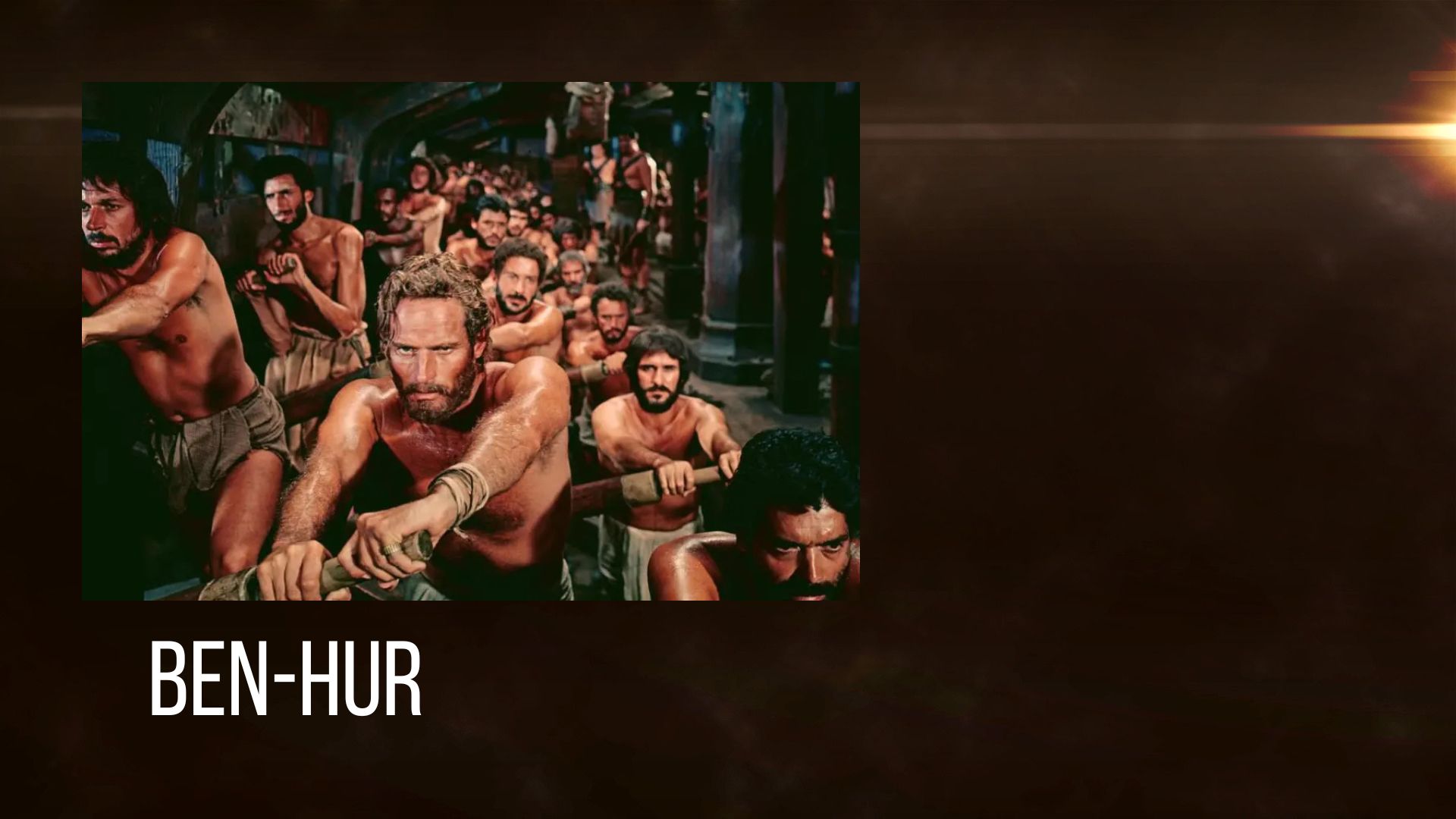
Just for fun a couple images from pop culture come to mind. Here’s an image from the 1959 movie Ben-Hur. He’s depicted here as a prisoner in the bottom of a Roman ship where they were forced to row to keep the ship heading where it needs to go. Unfortunately, I think this is a great illustration for how we often attack problems both as individuals and as groups. Sayings like “if it is to be, it is up to me” tell us that with grit and determination we can exact our will on the world around us and bend it to be what we want it to be. Just keep rowing. I think this mindset leads us to a lot of places we were never meant to go. It leads to power grabs, burnout, and a lot of frustration when we don’t get the outcome we want.

On the other hand, here’s an image from one of Wesley’s favorite movies, Moana. Which one of these pictures looks like they’re having more fun? When we accept our role as a group of people being led by the Holy Spirit, we can walk forward into community with empty hands, willing to accept the moment we’re in and be transformed by God no matter what comes our way.

So how do we as a church community get from being a rowboat to a sailboat? What sort of practices can we begin now so that when there are needed moments of discernment and direction from the Holy Spirit, it’s not such a foreign concept to us?

We’ll talk about this at the end of our series, but in Acts 15, the apostles had to discern what to do in a big way. There were some people that thought one way and some people that thought another, but because they had taken on a lifestyle that was so dependent on the guidance and discernment of the Holy Spirit, they were able to meet the moment, and be in tune with what God’s plan was for the Church.

In his teachings from Practicing the Way, John Mark Comer claims that if we want to become like Jesus, we’ll have more success if we train well than if we try hard. To explain that simply, the idea is that if you just wake up every day and try to be like Jesus, that’s great and good, but if you have not been committing yourself to the spiritual disciplines of prayer, meditating on Scripture, fasting, giving, and living in community with other believers, going out and being like Jesus will be frustrating to you because you will fail. On the other hand, when your heart has been transformed by the Holy Spirit through these spiritual disciplines, being like Jesus will be far easier for you, because you will already have been transformed into someone more like Jesus than you are right now.

So as we enter into a New Year here together today, my invitation to you is not to pick up a flyer on your way out that outlines our 2025 strategic plan for improvement and growth. Instead, I am inviting you to envision a church that walks in step with the Spirit, and help us take a step in that direction by engaging deeper in spiritual practice this year. That may be participating for the first time in a practice of Sabbath. Setting aside time in your week outside of Sunday morning removed from the workings and worries of your day-to-day life where you can spend time intentionally with God and your family or a close circle of friends. It may be praying each day for the first time in your life when you wake up, when you go to work, when you go to sleep. It may look like reading Scripture in community with other believers as part of a Bible Reading Group. It may be fasting from something in your life to make more room in your heart, your calendar, your wallet for the Kingdom of God.

And now we point ourselves towards the Table, the spiritual practice that we do together each week as we wait expectantly for the return of Jesus. All are welcome to come and share communion with us around one of our tables today.


January 5th, 2024

Watch Sermon: https://youtu.be/y8RdOEz9XPs?si=HeHO7gwHWWqYknZS&t=1632